



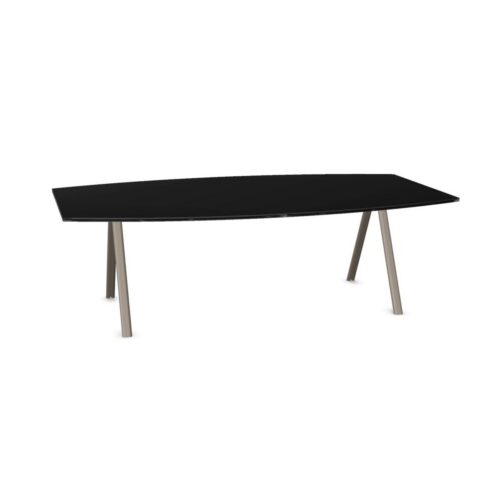



Orienting conference tables with oval tops and blue bases
Start with the direction of attention during the room's most common meetings. If participants mainly discuss work together, consider the relationships across and along the oval. If they regularly view a presentation, check the view toward that focal point from the curved ends as well as the sides. Position chairs according to those activities before refining their visual alignment. Review where the meeting leader will sit or stand and whether arriving participants can reach an available position without walking through the presentation area. A useful orientation makes these activities understandable without depending on repeated changes to the room arrangement.
Decide how blue relates to the interior
A blue base can repeat an existing color or provide a distinct point of interest beneath the top. Look at nearby upholstery, wall details, and floor colors before deciding which role it should play. An exact match is unnecessary unless that is a deliberate part of the room plan. Consider the amount of blue already visible and how chairs interrupt the view of the base. Assess the relationship under ordinary meeting lighting. Avoid assigning an automatic mood or productivity benefit to the color; the useful question is whether it works coherently with the room and its established visual character.
