







Conference Tables With Oval Tops and Brown Bases in Context
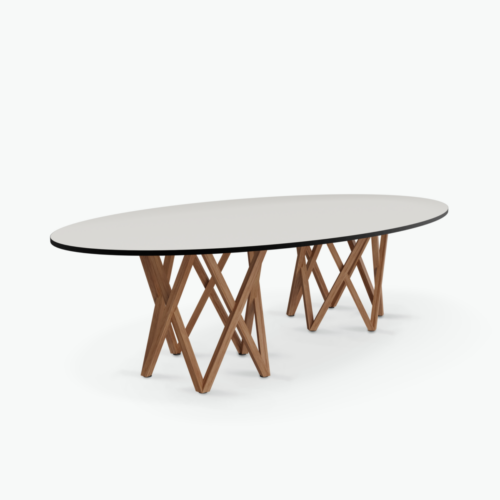
Begin with the finishes that will remain in the meeting room. The floor, doors and storage often occupy more of the view than a table base, so compare brown against those elements before concentrating on decorative details. Look for a relationship that feels intentional without requiring every brown surface to match. Different browns can appear disconnected when placed close together, while a clear difference may be easier to coordinate. Keep the oval outline in the same assessment: its curved edge affects the arrangement of chairs, whereas the brown base influences how the table sits within the room's overall palette.
Seat Participants Around a Continuous Edge
For a room centered on discussion, consider the view between each seating position and the people across the table. An oval perimeter gives you curved ends as well as longer side areas, so distribute chairs according to how they will actually be used. Do not assume that an end position automatically belongs to the meeting leader. A facilitator may work better elsewhere when using a shared screen or writing surface. Test access to each chair with neighboring seats occupied, and look beneath the top to establish whether the support arrangement suits the intended positions around the edge.
