

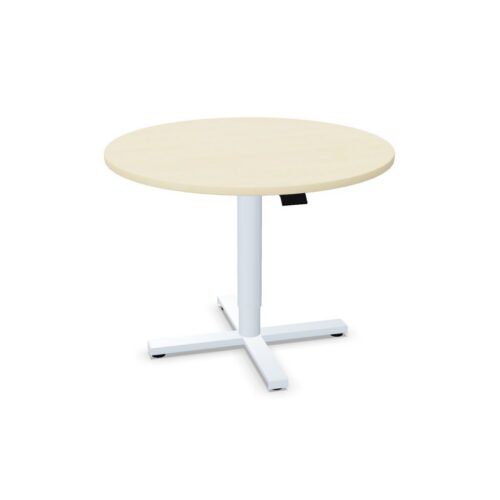
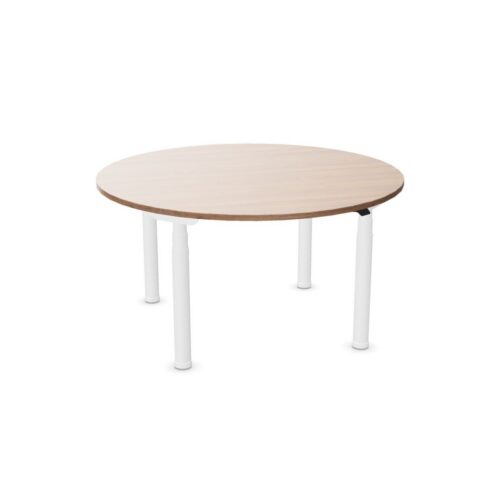
Round Meeting Tables With Adjustable Height

Changes to the tabletop level need to work with chair positions, presentation views and the space people use when approaching or leaving the table. This combination keeps the circular meeting surface while allowing its height to change. The round shape removes a designated end position, and the adjustable surface adds a separate decision about how each session should be arranged. The adjustment method is not specified, so check its operation before planning changes as part of a meeting.

Begin with the relationship between participants, then consider the table setting. A circular discussion layout may need to adapt when attention moves to a wall display or shared documents. The adjustment property alone does not establish the usable height range, the control layout or the procedure required before moving the tabletop. Assess access around the occupied table, the placement of any controls, and the relationship with nearby furniture. The useful combination is a clear discussion layout supported by an appropriate, verified height setting.

18 models
From €27.49 p/m
6 models
From €28.06 p/m
7 models
From €10.56 p/m
4 models
From €8.24 p/m
€15.35 p/m
10 models
From €48.26 p/m
31 models
From €25.60 p/m
5 models
From €55.48 p/m
9 models
From €6.19 p/m
5 models
From €34.09 p/m
4 models
From €44.38 p/m

Planning height-adjustable round conference tables

Compare a constant surface position with the actual reasons your team may want to adjust it. Different meeting activities can prompt a review of the setting, but adjustment should have a defined purpose. The round top maintains a shared center regardless of height, so the position of participants remains an independent planning decision. Identify which seats support conversation, presentation viewing, and access from the entrance. Then assess how the intended height relates to those positions. Confirm the available settings and operating method before assuming that the table supports any particular way of working or sequence of changes.

Place the Circle Within the Room's Routes

Look beyond the tabletop outline and plan for chairs in use. People need an understandable route to their places and a way to leave without repeatedly interrupting the discussion. A circular top has no corners to establish obvious end routes, so entrances and adjacent furniture become important reference points. Avoid placing an occupied seat directly where people naturally approach the meeting area. If the room has a display, review the seating pattern in relation to it. The most useful position for the table may be offset from the room's visual center to preserve access and workable presentation views.

Make Changes Understandable to Different Teams

Shared rooms benefit from an agreed preparation routine, especially when users can change the surface height. Decide whether a regular arrangement should be restored after meetings or whether teams should prepare the setting for their own activities. Explain how the preferred chair positions relate to access and presentation views. Once the adjustment method is established, include its relevant operating steps in the room routine. A clear handover should help the next group understand the intended setup without assuming a particular mechanism. Review the arrangement when meeting habits change, including when discussion-focused sessions begin using more shared screen content.

Check Every Intended Height in Context

A changed surface setting alters its relationship with chairs and objects nearby. Assess each intended arrangement with the seating in place, including chair arms where relevant and the routes people use to approach. If connected devices are part of the meeting, review cable paths before moving the surface. A clear adjustment routine for height-adjustable round conference tables should identify who prepares the table and the arrangement expected after each session. Keep the operating area accessible and follow the actual adjustment instructions. Do not infer suitability for standing sessions or another working posture solely from the presence of height adjustment; assess the intended use directly against the available settings.

Frequently Asked Questions

Does this combination specify how height changes?

No. It confirms height adjustment but leaves the operating method unspecified. Establish that method before assigning responsibility or deciding whether changes can fit conveniently into a session.

Can every seat face a presentation equally well?

Not automatically. A wall display creates a direction within the circular layout. Review individual views and adjust chair positions according to how much the meeting depends on shared screen content.

What should happen after a height change?

Check the seating relationship, access routes, nearby furniture, and any connected equipment. Make sure the resulting arrangement suits the planned activity before the meeting proceeds.

Before agreeing an adjustment routine, confirm that users understand the relevant instructions and know how the room should be left for the next session.

Keep the height-setting routine consistent with the room’s booking pattern so the next group knows how the furniture has been prepared.

Explore related selections