



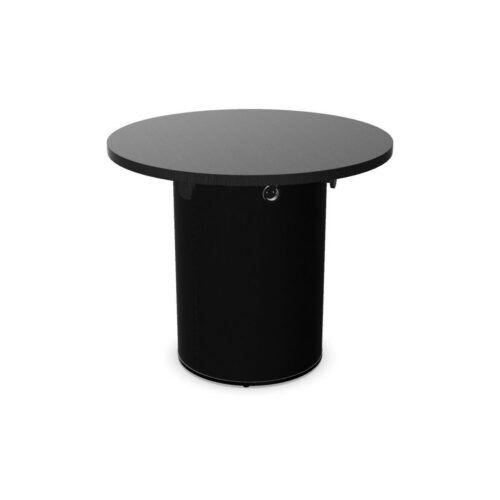


Use Contrast to Establish the Meeting Area
Start by comparing the black surface with the flooring directly beneath it. Their relationship affects how clearly the circular outline reads from the entrance. Then include chairs and walls in the same view. A coordinated dark palette and a contrasting light palette create different compositions without changing the table's basic geometry.
Decide which elements should attract attention during meetings. If the black tabletop is already the strongest color area, additional bold accents may compete with it. If it blends into darker surroundings, chair color or adjacent wall color may help distinguish the seating arrangement. Judge the complete room before making those supporting choices.
Conference Tables With Round Tops and Black Surfaces for Shared Work
The curved perimeter allows participants to face into a common discussion area. Arrange chairs according to the way the team works, including whether people bring laptops or mainly use shared papers. Avoid treating equal spacing as the only goal when particular seats also need a useful relationship with the presentation screen.
Review what happens at the center of the table. Shared documents should be positioned with the actual participants in mind rather than placed centrally by habit. The black surface provides a common visual background, but the success of collaborative work depends on how materials, devices, and people are arranged around that background.
Review Lighting From the Seats
Black describes the tabletop's color, not its response to light. Examine the surface under the room's regular lighting and in the presentation setting if lights are adjusted for screen use. Look at the relationship between the tabletop, documents, and display from the positions participants will actually occupy during a meeting.
Windows and overhead lights deserve particular attention when assessing reflections. Do not infer a matte or glossy appearance from the color description. Where the table can be positioned in different ways, compare the seated views before finalizing placement. This keeps the lighting decision connected to actual meeting tasks rather than the view from the doorway alone.
