

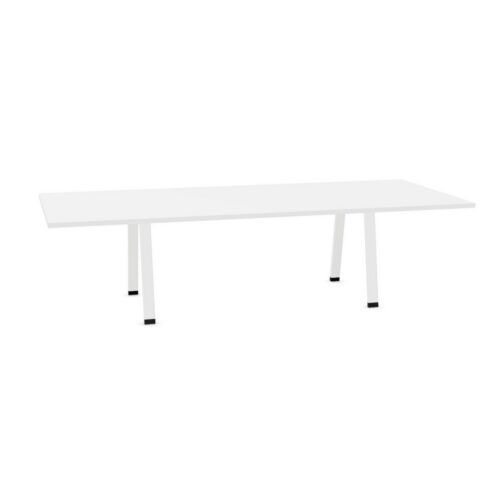
Beige Round Conference Tables for Shared Rooms

Conference tables with round tops and beige surfaces combine an uninterrupted circular edge with a light neutral color. The shape creates a common center for conversation without fixed sides or ends. Beige adds a separate planning question: how the tabletop will relate to nearby whites, grays, browns, and other neutral tones. Consider those relationships alongside seating, so the room has a coherent appearance and a practical arrangement for everyday meetings.

Round beige conference tables deserve a complete room assessment rather than a color decision made in isolation. A beige surface may sit close to some surrounding tones and remain clearly distinct from others. Review it under the lighting used for discussion and presentations. Place chairs according to how people enter, face one another, and view shared information, then check that access to storage and the doorway still works when the meeting is underway.

9 models
From €22.04 p/m
€9.29 p/m
€9.94 p/m
2 models
From €9.51 p/m
2 models
From €10.48 p/m
4 models
From €7.81 p/m
2 models
From €8.94 p/m
4 models
From €9.16 p/m
3 models
From €12.30 p/m
€12.46 p/m
2 models
From €6.14 p/m
4 models
From €6.03 p/m
5 models
From €20.67 p/m
3 models
From €15.35 p/m
3 models
From €22.04 p/m
4 models
From €59.03 p/m
3 models
From €21.01 p/m
2 models
From €19.64 p/m
3 models
From €14.84 p/m
2 models
From €67.03 p/m
3 models
From €25.99 p/m

Compare Beige With the Neutrals Already Present

Neutral colors can look closely related when considered separately yet noticeably different in the same room. Bring the beige tabletop into the visual plan alongside walls, flooring, and seating. Establish whether its role is to connect those elements or to create a distinct circular surface within a broader neutral palette.

Look at the combination in daylight and under the room's usual overhead lighting. Do not rely on the name beige to predict an exact match with another surface. The practical decision is whether the complete arrangement looks intentional from the entrance and remains visually clear from the places where participants will sit during meetings.

Conference Tables With Round Tops and Beige Surfaces for Group Discussion

The circular outline offers no built-in leading end. Use that quality to plan how people will join the discussion and share attention across the group. A facilitator can occupy a useful seat without the furniture shape assigning that position permanently, which may suit rooms used by different teams for different agendas.

Consider the center as part of the working arrangement. Shared papers can give the group a common reference, while individual devices need positions that preserve views of other participants. Beige forms the background for those objects, but neither the surface color nor the round shape replaces a clear approach to organizing meeting materials.

Let Access Determine the Final Position

A visually centered table is not always the most practical arrangement. Review the doorway, the routes to occupied chairs, and any furniture used during a session. Where these activities overlap, shift the meeting position to preserve a straightforward path rather than expecting participants to move chairs whenever someone needs to pass.

Round conference tables with beige surfaces should be assessed with the seating circle fully in use. Include likely bags and other personal items in that review. An arrangement that looks open before people arrive may work differently during a meeting, particularly where the route to storage passes directly behind the most frequently used seats.

Resolve the Relationship With Shared Screens

Start with the presentation location if screen use is central to the room's purpose. Review the display from the intended chairs, including positions facing away from it. Then assess whether the same arrangement still supports face-to-face discussion when the screen is no longer the main focus of the session.

The beige surface should also be viewed under the lighting used for presentations. Check the relationship between documents, the tabletop, and surrounding bright areas from seated eye level. Surface color does not establish reflectivity, so evaluate the actual conditions. This connects the color choice with ordinary reading and viewing tasks instead of appearance alone.

Keep conference tables with round tops and beige surfaces in view while comparing placement, access and the surrounding interior.

Compare how conference tables with round tops and beige surfaces relates to chair positions and shared views in the intended room.

FAQ About Beige Round Conference Tables

How can beige sit alongside white walls?

Compare the colors directly in the room's everyday lighting. They may appear closely related or clearly distinct. Decide which relationship suits the interior, then include chair upholstery and flooring in the assessment so the tabletop belongs to a considered overall palette.

Where should a facilitator sit around the circle?

Choose according to the agenda, entrance route, and screen location. The round top does not define a head position. A useful facilitator seat allows contact with participants and practical access to the materials or presentation controls needed during the session.

What should be reviewed before moving nearby storage?

Place chairs in their intended working positions first. Check how cabinet access interacts with occupied seating and the route to the door. Position storage around those daily movements so its use remains straightforward while a meeting is taking place.

Explore related selections