



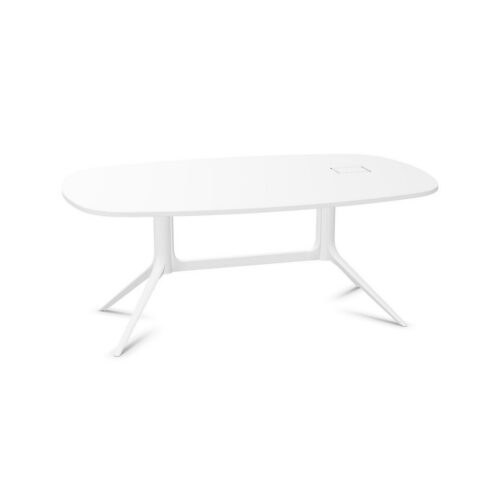

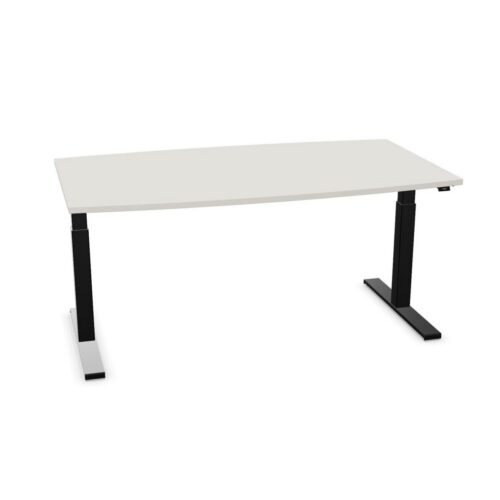

Planning height-adjustable rounded both sides conference tables
The distinction is whether the working surface can change height. Identify the reason that matters in the room before planning a routine around it. Different activities or users may call for different settings, but the table's supported adjustment must match those needs. Do not infer a particular operating mechanism or working range from the presence of adjustment. The rounded sides remain part of the assessment throughout: a useful height setting still requires thoughtful chair positions around the curves. Evaluate shape and height together through the activities the room is expected to support.
Recheck Chair Alignment Around Curved Edges
Begin with chairs in working positions and assess the relationship between each user and the nearest part of the tabletop. Curved sides can change that relationship along the perimeter, so an arrangement that looks evenly spaced may not be equally useful at every place. Review armrests, approach to the edge and the direction participants face. Repeat the check when the table height changes. If a presentation is central to the meeting, include the viewing direction in the review. Adjustment changes the working height, while chair orientation and the tabletop outline continue to govern how people gather.
