





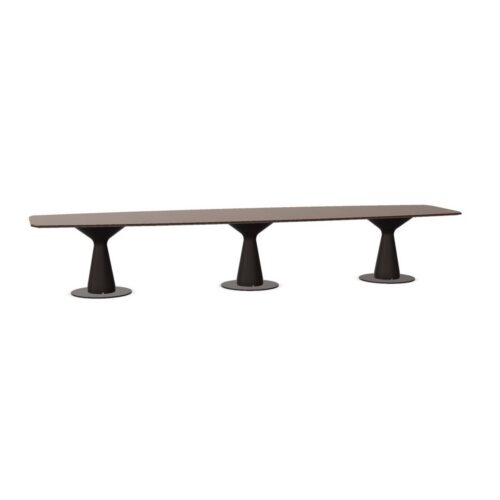

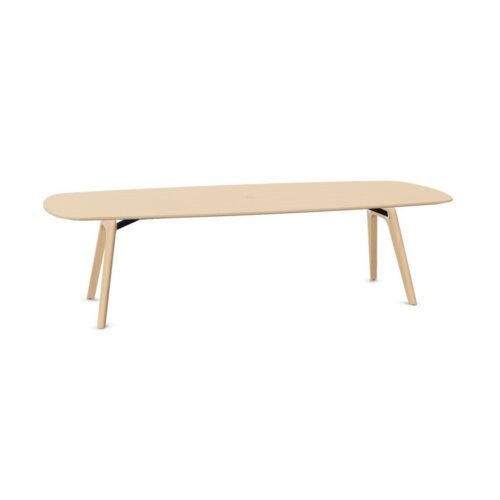

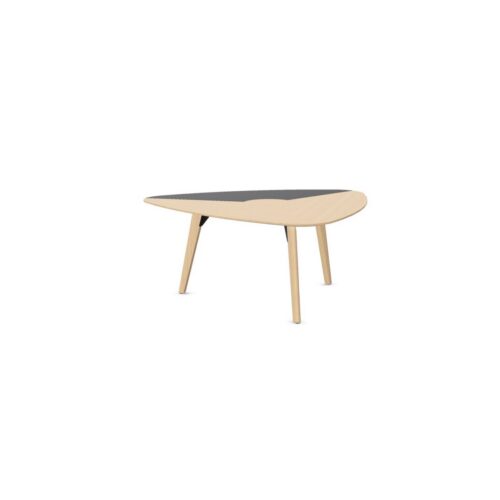
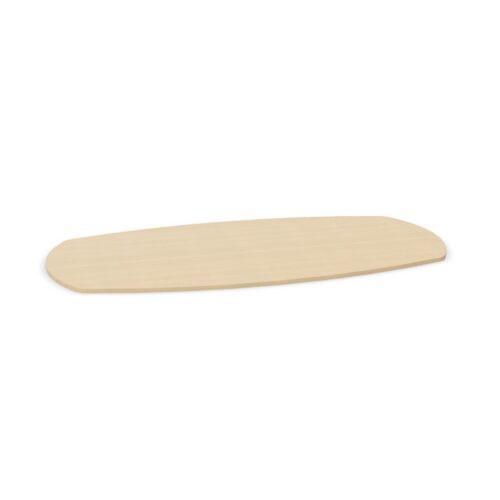
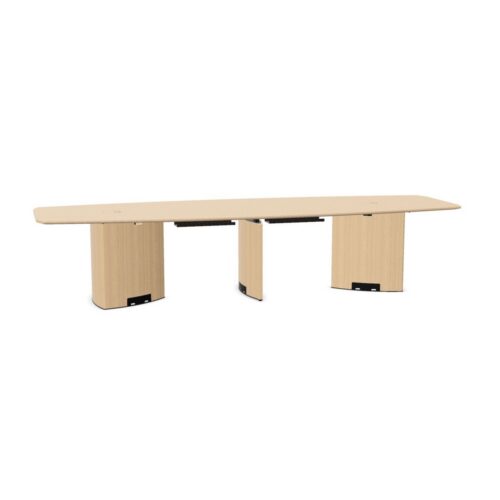


Seating at Fixed-Height Conference Tables With Tops Rounded on Both Sides
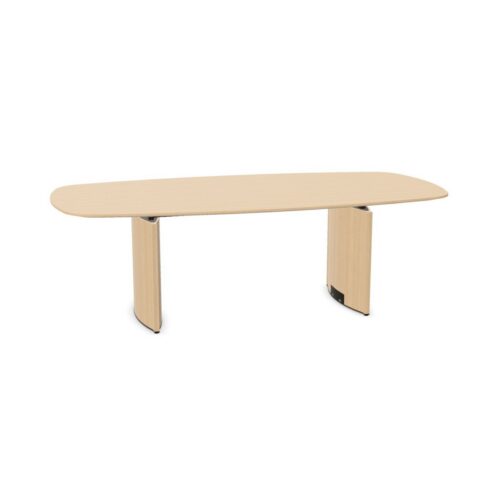
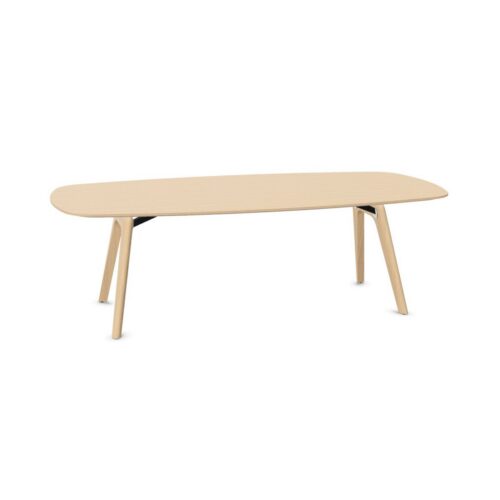
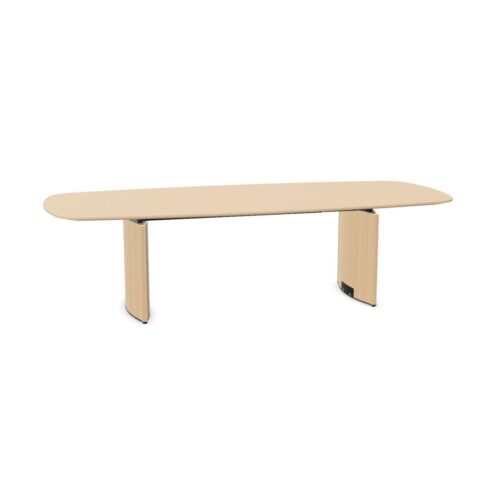
Assess chair positions around the curves individually. A chair placed at a changing edge angle may need to face differently from its neighbor to provide a useful working position. Check where a person will rest their forearms, place notes and turn toward the discussion. Avoid arranging chairs solely to create an even visual pattern. The most practical positions follow how people use the tabletop. Include the room's presentation point in the assessment, particularly where a curved side changes the direction someone naturally faces when approaching the edge with a chair.
Choose Chairs for the Available Working Height
The tabletop height remains unchanged, so compare chairs against that existing position. Consider the seated relationship to the surface during writing, typing and reviewing shared papers. Check any armrests against the edge and underside at the actual place where the chair will be used. A chair that fits at one point should still be reviewed elsewhere around a curved outline. Adjustable seating can help different users find an appropriate position, but it does not alter the table. Establishing compatible seating early prevents the room arrangement from depending on a height change the table cannot provide.
