

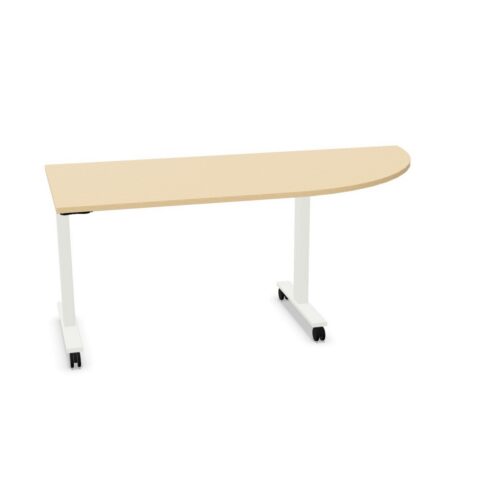
Semi-Oval Meeting Tables Without Cable Trays

Conference tables with semi-oval leaf tops and no cable tray combine a semi-oval tabletop outline with the absence of under-table cable storage. Consider how the curved portion and the rest of the boundary relate to the intended seating, then assess any equipment connections separately. The most useful orientation depends on whether participants mainly face one another, share documents or turn toward a presentation. The shape alone does not settle those room-planning decisions.

Semi-oval conference tables without cable trays need particular thought where meetings involve connected devices. Locate the room’s power points and examine the route to each intended working position without assuming that cables can be gathered in a tray beneath the surface. For sessions centered on unconnected work, give priority to access, conversation and shared materials. In both situations, review the actual tabletop outline with chairs in use before deciding how the table should sit within the room.

Price on request
6 models
From €10.56 p/m
7 models
From €10.56 p/m
18 models
From €42.84 p/m
6 models
From €48.77 p/m
4 models
From €36.06 p/m
3 models
From €10.00 p/m
5 models
From €12.69 p/m
3 models
From €5.08 p/m

Orienting Conference Tables With Semi-Oval Leaf Tops

Assess the semi-oval outline in relation to the room's main focus. The curved portion may influence how chairs face the table and one another, while the remaining boundary needs to be considered within the same arrangement. For presentation meetings, test the display view from every intended position. For shared discussion, examine the relationships across the working surface. Do not assume the table must sit against a wall simply because part of its outline differs from the curve. Let access, sightlines and the intended work determine its placement within the room.

Plan Connections Without a Tray

The absence of a cable tray matters when devices need a connection during the session. Trace the route from room power points to the working surface and consider what happens to cables beneath and beside the table. Semi-oval leaf tables without cable trays do not provide that particular place to gather them. Any other cable provision remains a separate question. Review planned connections alongside leg space, chair movement and the route to the doorway. If the arrangement creates a conflict, revisit equipment positions before treating the room plan as settled.

Use the Surface for Document-Led Sessions

Meetings centered on papers and conversation place the emphasis on working access rather than connected equipment. Position individual materials at the intended chairs and identify where shared references will sit. Conference tables with semi-oval leaf tops should be assessed against that actual pattern of use. Pay attention to the curved portion, where chair angles may change the relationship between personal notes and shared papers. Avoid filling every part of the boundary with seating by default. A deliberate arrangement can leave useful surface areas available for the documents the meeting needs.

Keep Arrival Routes Clear of Equipment

Walk through the proposed arrangement from the doorway to the seats. Include chairs pulled back, bags being collected and any temporary presentation equipment. With semi-oval conference tables that have no cable tray, connected devices need a routine that keeps loose cables out of those movements. Check access to storage and presentation controls as well as the main exit route. The curved outline should be traced accurately in the room plan, since a clear-looking space beside the tabletop may function differently once a chair is occupied and someone passes behind it.

Frequently Asked Questions

Does a semi-oval top need to face the presentation wall?

There is no universal orientation. Position the actual outline in the room and assess the view from each intended chair. If discussion and presentations are equally common, test both activities so the arrangement does not favor a display view at the expense of working access.

Is a cable tray necessary for every meeting?

Its relevance depends on the equipment used and whether that equipment needs connections during the session. For document-led meetings, a tray may have little role in the routine. Where powered devices are involved, the connection arrangement needs to be planned without assuming a tray is available.

Does no cable tray rule out other cable provisions?

No. It establishes the absence of the tray only. Other provisions cannot be inferred either way from that fact. Assess any required connection features separately, then check how the confirmed arrangement relates to chair positions, the semi-oval outline and the room's available power points.

Keep conference tables with semi-oval leaf tops in view while comparing placement, access and the surrounding interior.

Explore related selections