



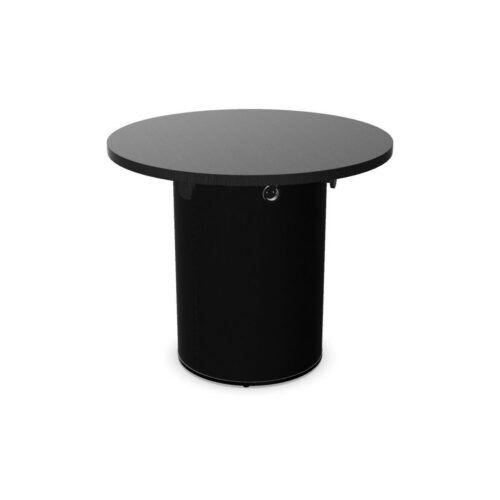




Hosting around conference tables with round tops
Choose the host's position according to the activity and the room. With no designated end in the circular outline, the host can be assessed alongside other participants rather than placed automatically at a particular point. Check their view of the entrance, colleagues and any shared display. If they need to stand or move toward presentation equipment, test that journey while chairs are occupied. Discussion should not depend on everyone facing a single direction throughout the session. Establish where shared reference material belongs so the host can guide the agenda without collecting every document in their own working area.
Plan approaches around the whole circle
Look at each intended chair position in relation to doors, walls and neighboring furniture. A circular tabletop changes direction continuously, which means approaches may differ around the room. Walk the routes people will use to arrive, sit down and leave during a meeting. Keep portable equipment out of the places where those routes meet. Do not assume that a curved edge establishes adequate circulation by itself. The occupied chairs and the movements behind them are part of the arrangement. Review positions nearest the entrance carefully if late arrivals are common or people regularly step out during discussions.
