



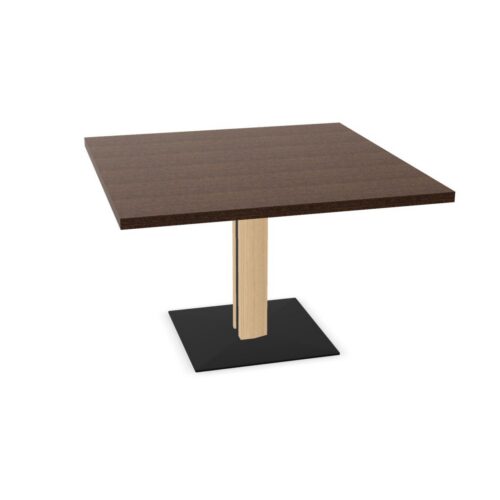


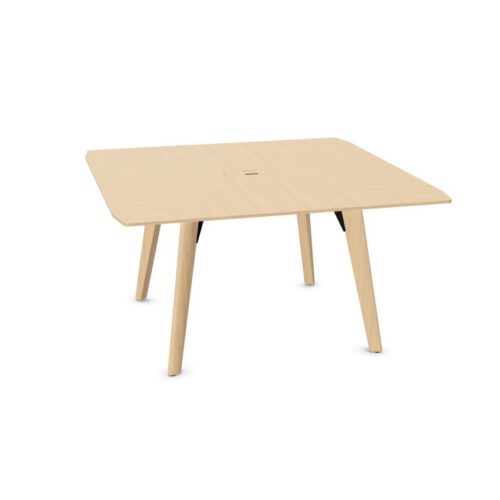


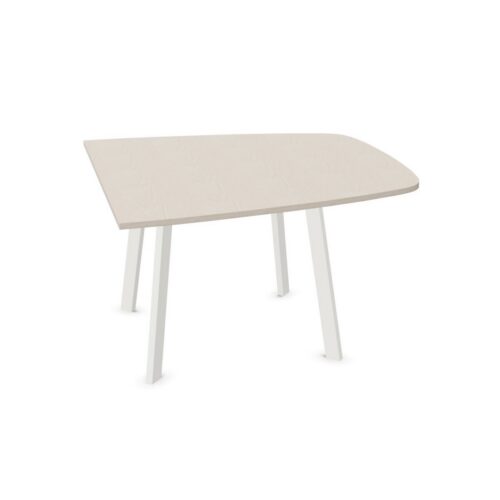


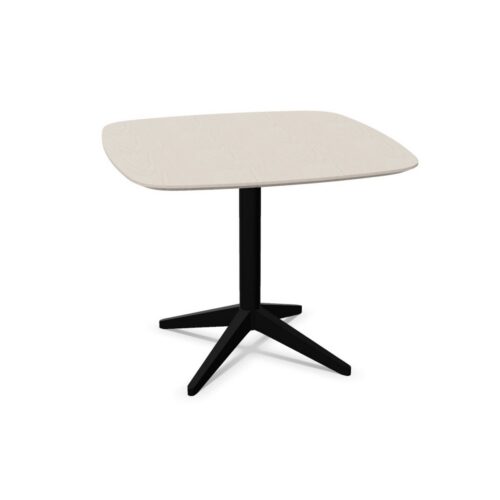

Planning conference tables with square tops and beige bases
A square top creates a meeting area without a distinct long side. That can be useful when conversation moves between participants rather than consistently toward a person at the end. Decide whether the room primarily supports shared discussion, document review or presentations, then orient the table around that activity.
Keep the square outline legible in the room plan. Aligning an edge with a wall can give the arrangement a settled appearance, while turning the table changes how its corners meet circulation routes. Test the entrance approach before choosing an orientation simply because it looks balanced from the doorway.
Relating beige to the floor and seating
Beige can connect the table base with a restrained room palette, but the relationship depends on the surrounding colors. Against a similar floor color, the base may appear less distinct. Against a darker floor, its outline may become more noticeable. Assess that relationship from seated and standing viewpoints.
Chair frames and upholstery also influence how the base reads. You can repeat a related neutral elsewhere or allow beige to remain a separate element. Avoid assuming that every beige has the same undertone. Compare the actual appearance with existing finishes under the lighting used during meetings.
