

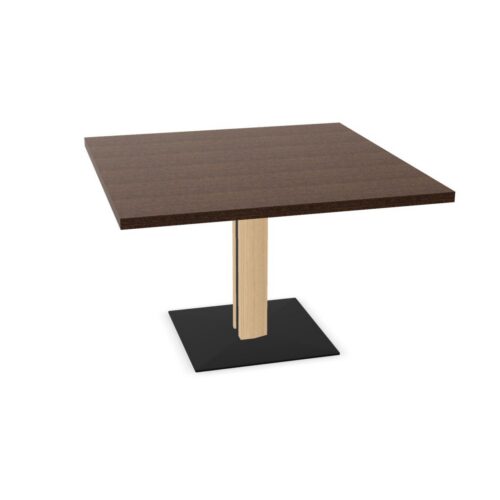
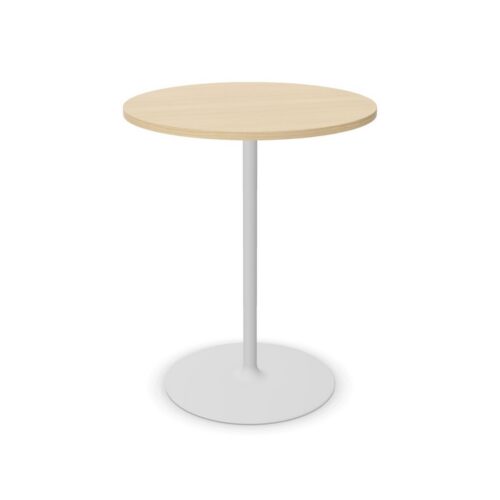
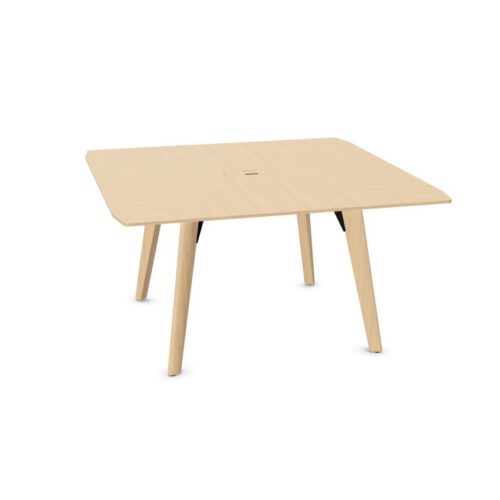
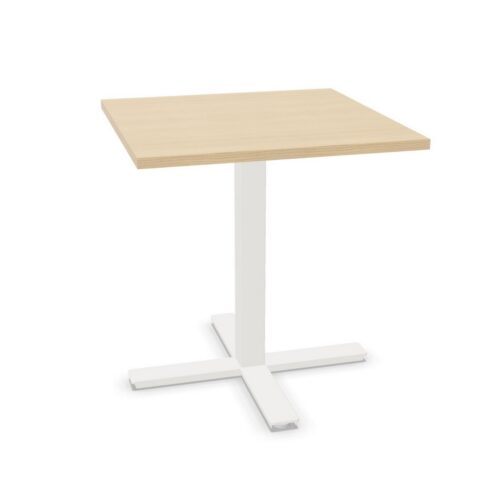
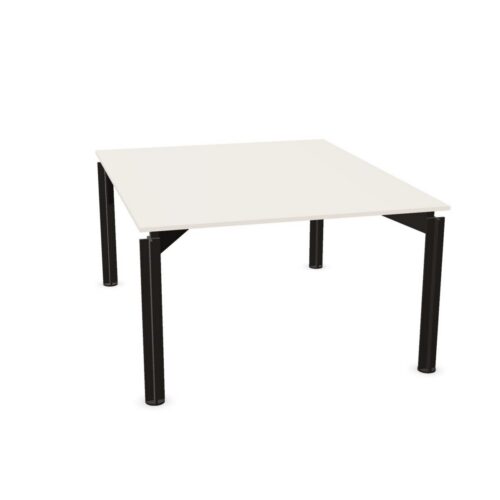
Square Conference Tables With Black Bases

Conference tables with square tops and black bases combine a tabletop with equal sides and a dark base color. The square outline gives a meeting arrangement a clear relationship to straight walls and surrounding furniture. Black supports can connect visually with chair frames, display surrounds or other dark details, depending on the room. Consider this combination when the meeting area needs a defined geometric presence within an otherwise varied interior.

Plan the seating before deciding how the table should align with the room. Straight edges offer clear positions for chairs, while corners need attention wherever people pass or turn. The black base should also be considered at seated eye level, where its relationship with chair legs becomes more apparent. Neither the square shape nor the base color establishes the support configuration, so check the actual space beneath the tabletop alongside circulation, access to storage and views toward shared presentation areas.

8 models
From €30.61 p/m
11 models
From €21.26 p/m
18 models
From €27.49 p/m
6 models
From €28.06 p/m
11 models
From €8.94 p/m
4 models
From €30.13 p/m
3 models
From €30.93 p/m
2 models
From €2.13 p/m
2 models
From €17.92 p/m
11 models
From €15.25 p/m
4 models
From €23.04 p/m
5 models
From €16.03 p/m
2 models
From €13.06 p/m
13 models
From €8.10 p/m
6 models
From €5.43 p/m
11 models
From €11.32 p/m
2 models
From €8.82 p/m
2 models
From €227.52 p/m
2 models
From €29.31 p/m
3 models
From €28.70 p/m
15 models
From €16.44 p/m

Seating Conference Tables With Square Tops and Black Bases

Use the straight tabletop edges to organize the discussion, then check how the corner positions affect neighboring chairs. Chairs that look neatly arranged in an empty room may overlap with circulation once people sit down or move back. Decide whether the meeting routine calls for participants facing each other, facing a display or alternating between both. A square plan can support a balanced arrangement, but it does not automatically provide an equivalent view from every seat. Black base color adds visual definition underneath; the actual supports still need to fit the intended chair positions.

Using Black as a Repeated Room Detail

A black base can relate to existing dark elements without requiring every furnishing to use the same color. Look for details already present, such as chair frames or the border around a shared display. Repeating black selectively can connect the meeting table with those features. If the room already contains extensive dark furniture, assess whether the base remains distinguishable or blends into the background. View it under normal working light, including from the entrance. The tabletop color is a separate consideration and should be evaluated alongside the base rather than assumed from it.

Protecting Access Around Square Corners

Place conference tables with square tops and black bases with particular attention to the route between the door and the seating area. A tabletop corner should not become the point that everyone must squeeze past. Aligning an edge with a nearby wall can clarify the arrangement, although the complete chair layout matters more than visual alignment alone. Check access to storage, presentation controls and any frequently used room equipment. Where people arrive after a meeting has started, provide an approach that lets them reach an available chair without asking others to interrupt their work.

Reviewing the Space Beneath the Top

The dark base may be visually prominent, but color says nothing about how its supports are arranged. Inspect the actual base in relation to knees, feet and chair movement. Pay attention to where participants naturally sit along each edge, especially if meeting materials encourage them to shift toward a corner. Consider the view through the room as well: chair legs and table supports can form a busy pattern when several dark elements overlap. A deliberate seating layout helps the square top and black base read as a coherent part of the room rather than an isolated object.

Frequently Asked Questions

Must the chairs also have black frames?

No. Matching frames can create continuity, but a different chair finish may work with the surrounding interior. For conference tables with square tops and black bases, assess the complete seated arrangement, including how much of the base remains visible.

Should a square table always follow the walls?

Following the walls is a useful starting point, especially when nearby furniture has straight edges. Another orientation may suit the doorway or presentation wall better. Prioritize movement and viewing positions over a perfectly symmetrical floor plan.

Does a black base determine the tabletop finish?

No. Base color and tabletop shape do not establish the tabletop color or material. Judge the complete combination on its actual appearance, checking how the top, supports and surrounding furniture work together under the room's usual lighting.

Explore related selections