



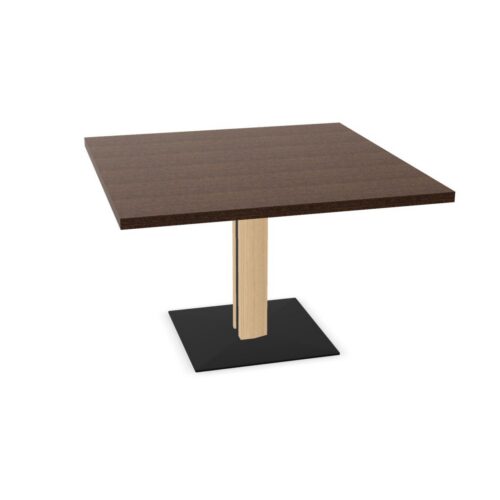
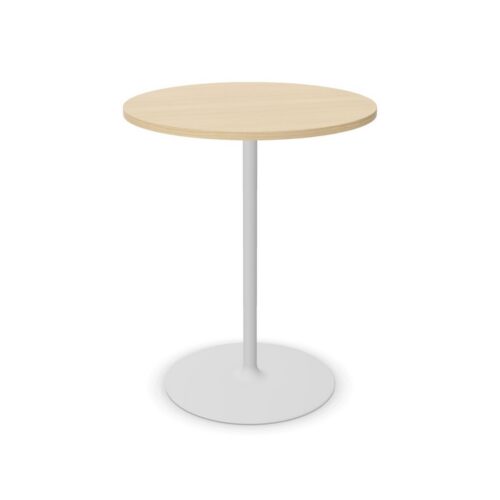


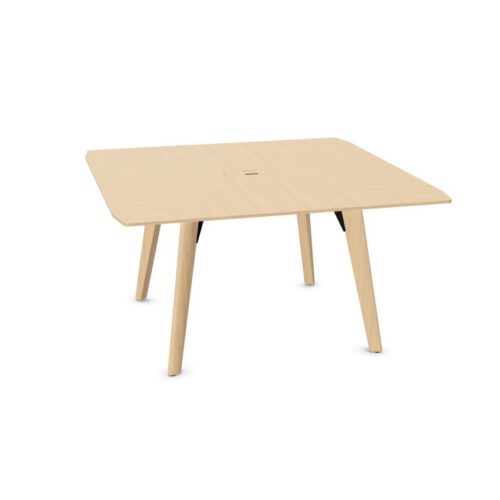

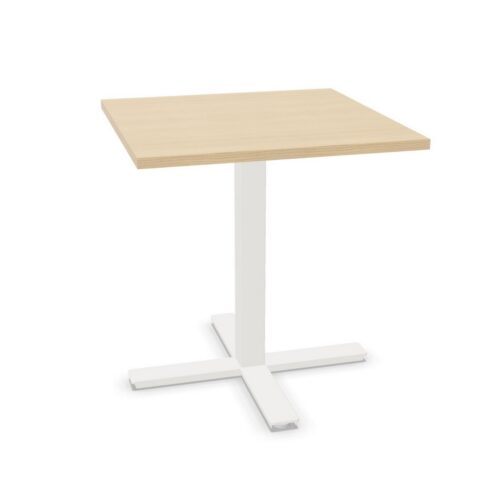
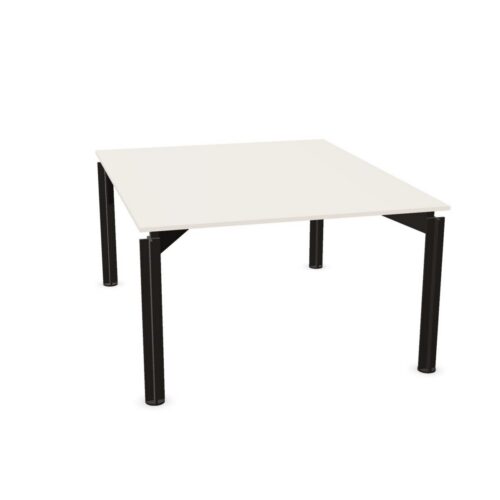


Coordinating Conference Tables With Square Tops and White Bases
Begin with the light finishes that already shape the room. White supports may sit near painted walls, storage fronts or pale chair frames, but these surfaces need not match exactly. Examine whether their differences look deliberate under the lighting used during meetings. Against darker surroundings, the base may become more visible; beside other light furniture, its outline may recede. Neither effect determines practical suitability. Keep the visual assessment connected to the square tabletop above it, considering how the straight edges relate to nearby cabinets, wall lines and the intended seating arrangement.
Giving Each Edge a Practical Purpose
A square tabletop invites a clear arrangement along its sides. Decide where people will sit, where meeting materials will be shared and which edge needs the easiest approach. Avoid treating every side as interchangeable if the room includes a presentation wall or an awkward entrance. The chairs nearest the doorway may need a different approach from those beside a wall. Check the corners after chairs are positioned, because the route around a bare table can look more generous than the route around an occupied meeting. Organize the room around real meeting behavior.
