






Planning Conference Tables With Rectangular Tops and White Bases
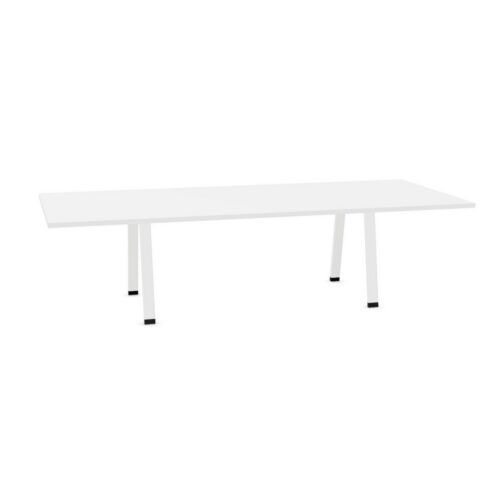
Use the rectangular outline to establish the direction of the meeting area. Aligning the table with the room can make the arrangement easy to understand, but the display, entrance and circulation routes should determine the final position. Consider what happens when chairs are occupied as well as when they are tucked away. A route that appears clear in an empty room may become awkward during a meeting. Treat the corners as part of this review, especially where people turn toward a doorway. The white base belongs in the visual plan, while the tabletop outline provides the starting point for arranging activity around it.
Relating White Supports to Nearby Furniture
Decide which surrounding elements the base should relate to before repeating white throughout the room. White storage, door frames or chair details may provide a useful connection, but an exact match should be assessed in the room's lighting. Nearby colors can change how separate white surfaces appear together. If the chairs are dark, the difference between seating and supports may become more noticeable beneath the tabletop. That can be intentional. View the arrangement from the entrance and from a seated position, where different parts of the base are visible. Let those views guide the balance rather than assuming that every white element needs to match.
