


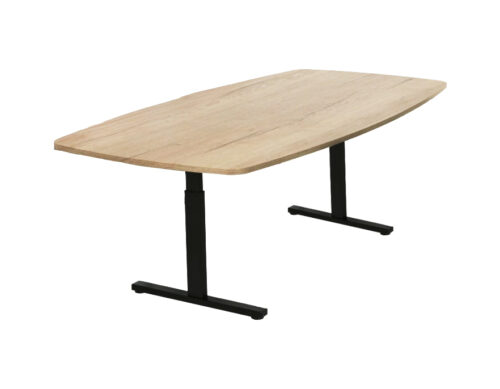
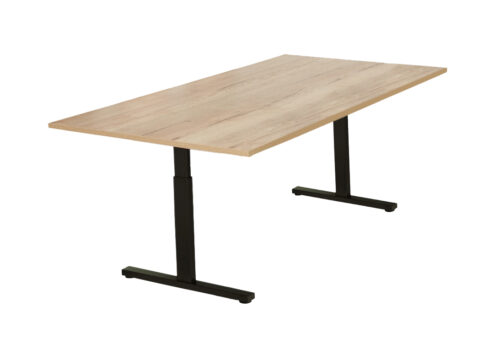
Planning manually adjustable straight blade conference tables
The distinction concerns how the working height is set. Describe the working positions the room needs, then test the table with occupied chairs, connected equipment and clear access to each seat. Consider whether the room benefits from changing that setting between uses or mainly needs an established arrangement for recurring meetings. Do not assume how the manual adjustment operates or which working postures it accommodates. Those details are not established by the selected properties. Keep the tabletop description separate from that comparison: straight blade identifies the chosen top shape, but the actual outline still needs to be reviewed when positioning chairs and planning circulation.
Plan Adjustment Around the Meeting Routine
Think through when a change of working height would happen and how the room is prepared afterward. A shared room needs an understandable routine so the table is ready for the next meeting. Identify who takes responsibility for adjustment and whether a usual setting should be restored after a different use. For manually adjustable straight blade conference tables, establish which working positions the room actually needs before deciding how often to change the setup. Confirm the actual adjustment procedure before establishing that routine. Avoid assuming a particular control, mechanism, effort level or ability to adjust the table while meeting materials remain on the surface.
