



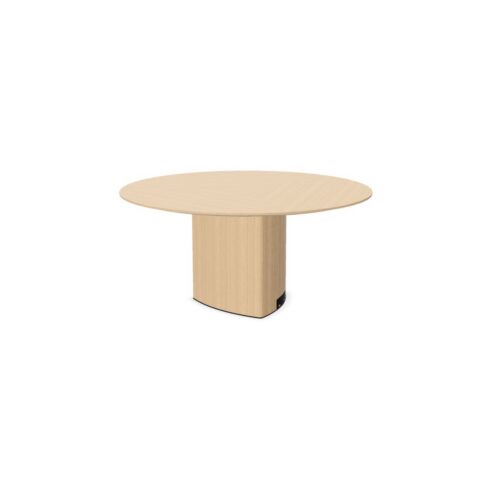
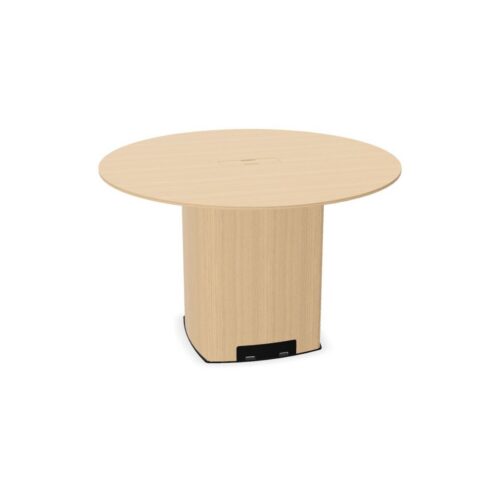
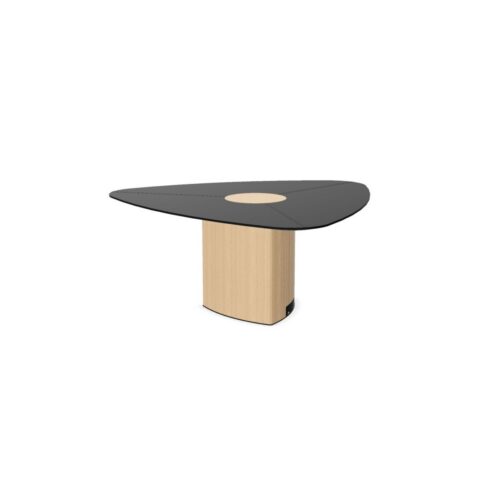


Coordinating conference tables with trigoon tops and wood bases
Start by identifying which existing wood-colored element has the strongest presence in the room. It might be the floor, a bank of storage or the entrance door. Use that as a reference when assessing the base color, while allowing the tabletop outline to remain a separate decision. Closely related tones can create continuity; visibly different tones can also work when their relationship is deliberate. Avoid judging the base in isolation from the room. The combination will be seen alongside chairs, flooring and other furnishings, and those surroundings influence whether the wood color feels integrated or visually disconnected from the meeting area.
Let the Outline Guide Chair Placement
A trigoon top calls for attention to the relationship between its contour and the intended seats. Begin with the positions people need for conversation, then check how those positions meet the table edge. If a display is regularly used, review the same arrangement for viewing comfort. Do not assume that a seating pattern borrowed from another tabletop shape will transfer successfully. Walk around the proposed arrangement with chairs pulled back as well as occupied. This reveals where movement may become awkward and where the table could be turned to improve access without changing the overall purpose of the room.
