



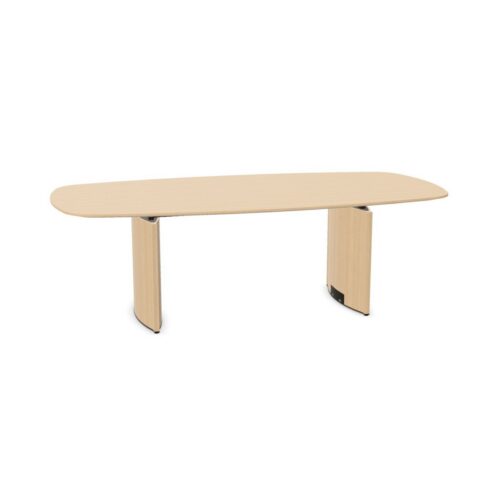

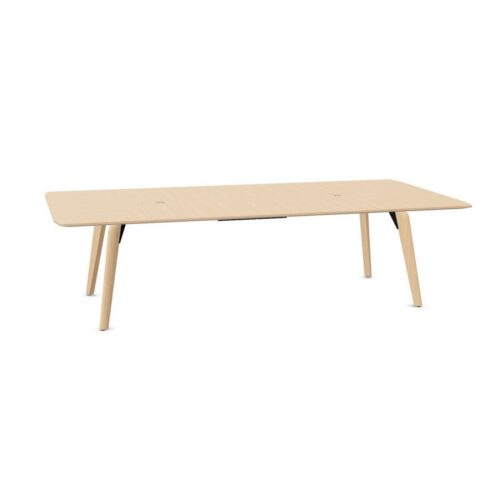
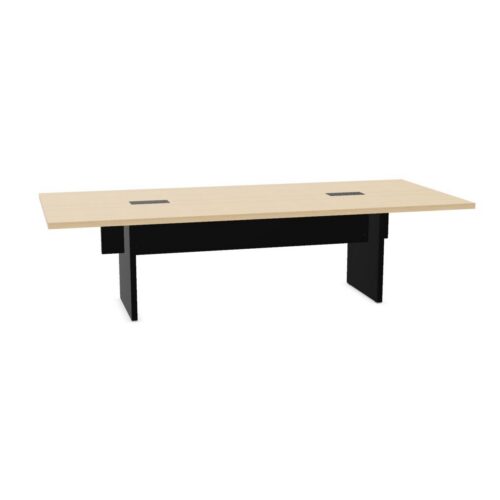

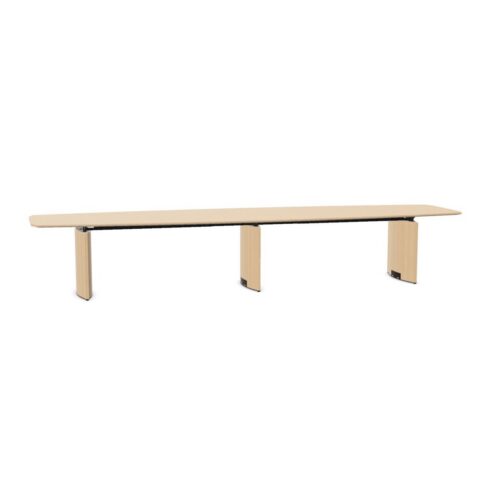


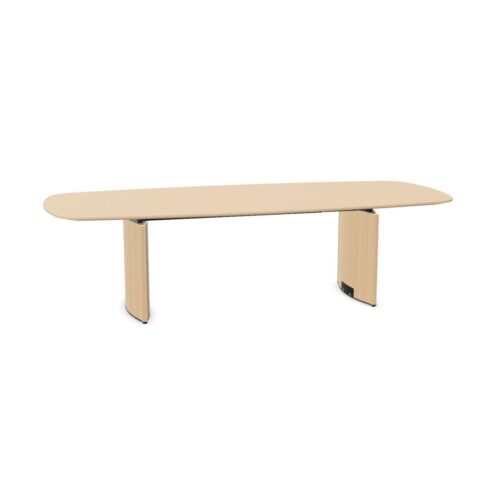

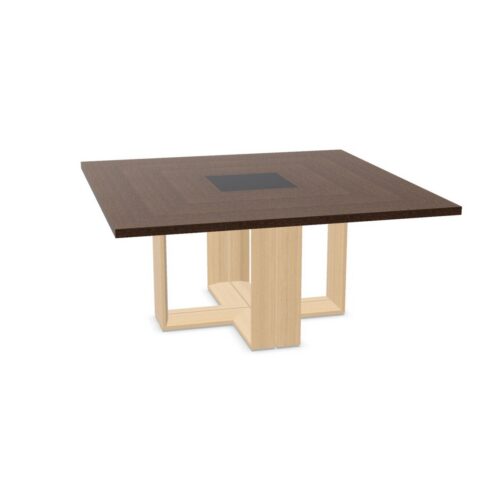


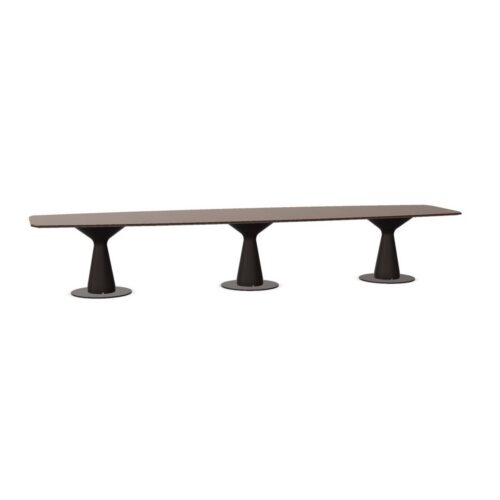


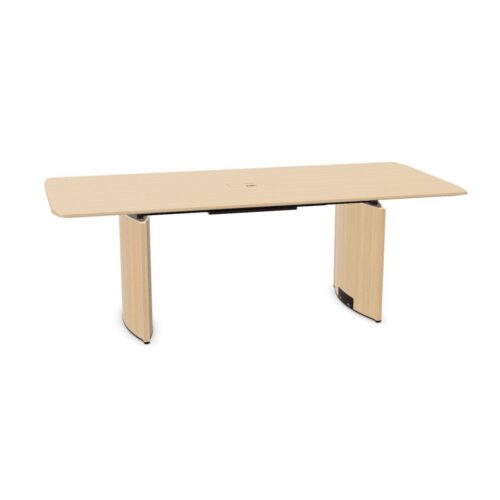
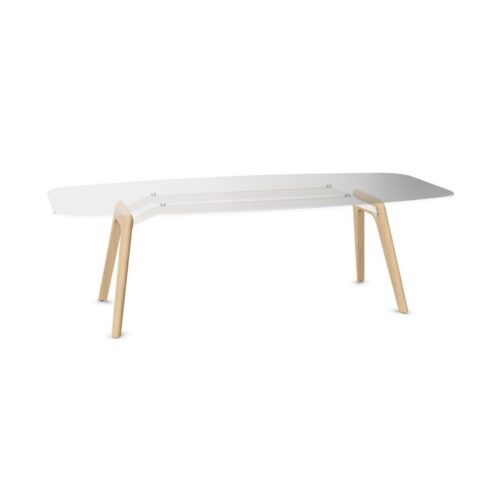
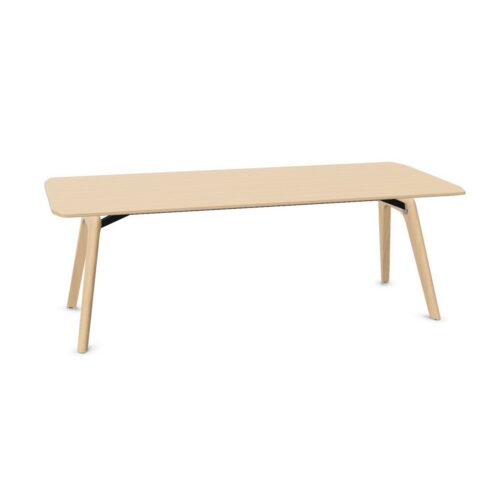


Coordinate Conference Tables With Rectangular Tops and Wood Bases
Begin by identifying the wood-colored elements that remain visible during meetings. A door, storage unit, or wall detail may have a stronger visual presence than the floor. Decide which element should guide the relationship with the table base. An exact match is only one option; a deliberate difference can also form a coherent room palette. Compare the actual tones together rather than assuming all wood colors belong to the same visual family. Keep construction questions separate, because the base color does not specify the material, species, or treatment used to create its appearance.
Set the Meeting Direction Before Adding Chairs
The rectangular top establishes an obvious axis within the room. Use that axis intentionally by considering whether attention usually moves toward a screen, across shared papers, or between colleagues seated opposite one another. Then review the relationship between the table and the entrance. An arrangement that follows the room's walls may still place an inconvenient corner in the arrival route. Check the approach to both sides and consider whether end positions serve the meeting format. Let the activity and circulation guide the arrangement before judging how symmetrical it looks from the doorway.
