



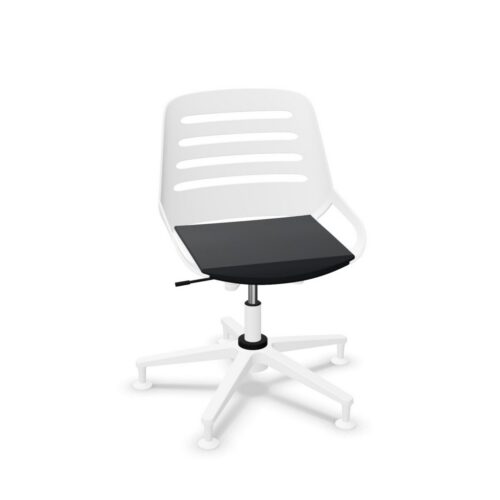
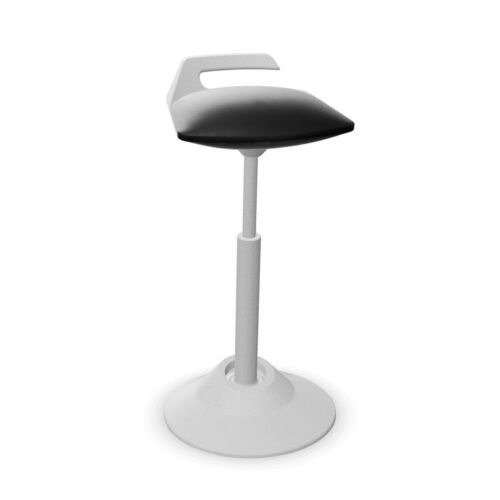


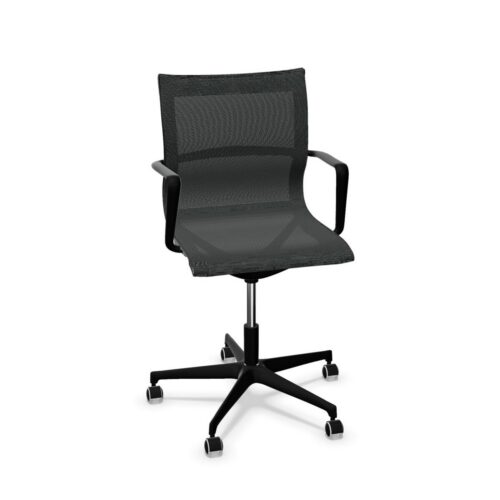


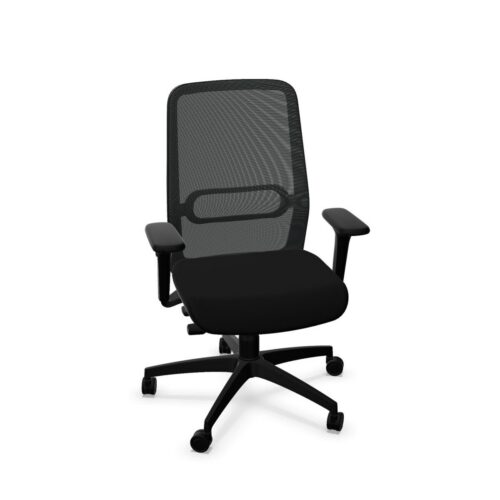


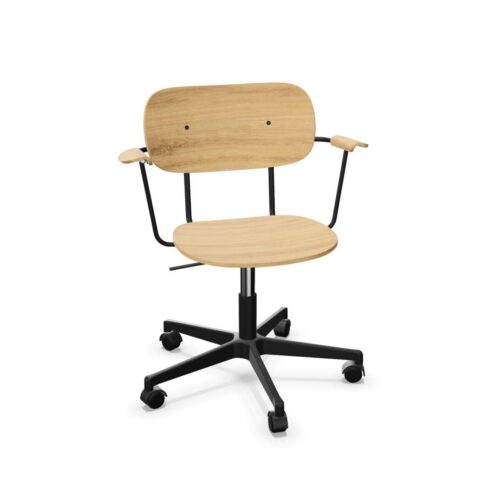


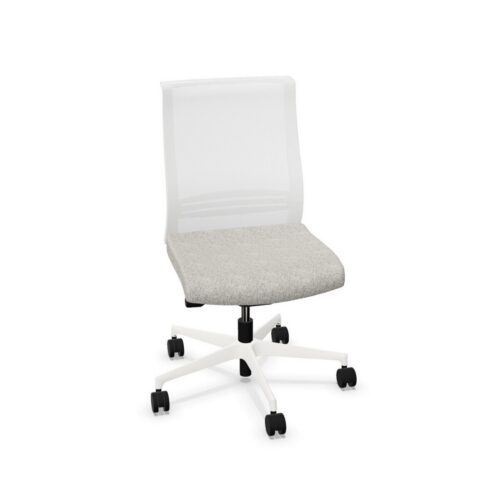

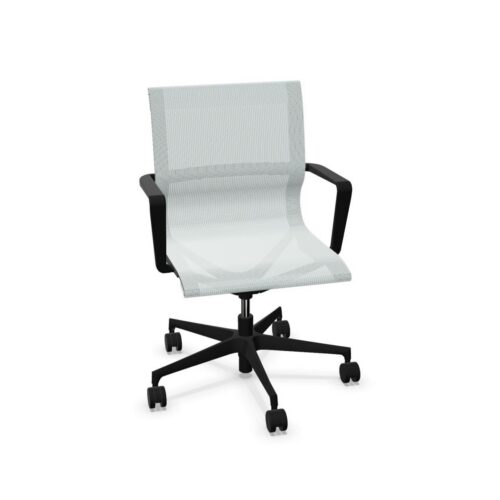
Start With Reach Rather Than Appearance
Trial armless office chairs with unspecified standards at the workstation where they are intended to be used. Ask participants to begin a normal task and observe the distance to their equipment. Open sides do not determine working reach, so check how the seat, desk and person relate during actual activity.
Include more than keyboard work if the role involves writing, handling documents or reaching towards adjacent equipment. Note where the user places the forearms and whether the desk edge affects that position. These details help explain suitability more clearly than an initial preference for the appearance of an armless chair.
Observe The Whole Movement Sequence
Assess entry, changes of direction and exit as well as the seated task. Without armrests, there is no chair arm to assess for contact with the desk, but other parts of the arrangement still need examination. Observe the available space and how users move within it under realistic working conditions.
Ask participants to identify the reason for any repeated repositioning. A movement may reflect equipment placement, personal habit or a seating mismatch, and those possibilities call for different responses. Record the activity and surrounding arrangement so that a comment about movement can be interpreted accurately when the assessment is reviewed.
