



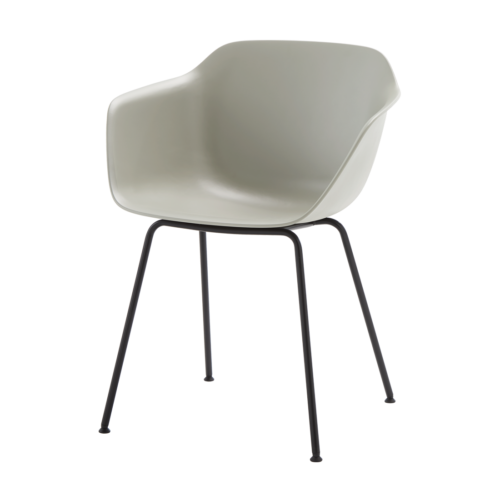


Map The Approach To Each Workstation
Position office chairs with armrests and black bases where employees will use them, including the usual surrounding furniture. Watch the approach from the main circulation route and check the space needed to sit down. Then assess leaving the seat and moving towards nearby storage or equipment. Include the base footprint in those observations rather than measuring only the seat width. Mark any point where an armrest meets a desk edge or cabinet. A simple plan with relevant dimensions helps explain which constraints come from the room and which belong to the chair's own proportions.
Understand The Available Arm Position
Armrests are confirmed, but their shape and settings require inspection. Ask users to perform tasks that represent their normal work, paying attention to forearm contact and freedom to reach equipment. Compare the arms with the underside of the desk at the user's chosen seated position. Establish any height, width or other adjustments directly. Office chairs should accommodate the intended activity, so a favourable observation during conversation should not replace a typing or writing trial where those tasks are part of the role. Record the differences employees identify between these activities during the same assessment session.
Keep Black Separate From Material Assumptions
A comparison of office chairs with armrests and black bases should describe what is actually known about the base. Black identifies colour, not an underlying material or a particular surface treatment. Ask for construction details, cleaning instructions and the documented conditions of use. Confirm how the base contacts the floor and whether any specific floor protection is required. If coordination with existing furniture matters, assess the visible finish beside it. Maintain a separate record of performance information, since colour similarity cannot establish equivalent strength, movement features or suitability for the same working conditions.
