







Confirm the Backrest Fits Without Repositioning
The key functional question is whether the backrest supports an appropriate seated position at its existing height. Sit back naturally, place your feet on a suitable support surface and work briefly at the desk. When assessing office chairs, observe whether the backrest meets your back where expected or encourages you to shift away from it. Because vertical repositioning is unavailable, changing backrest height cannot resolve a mismatch. The white base is a separate appearance choice. Evaluate both qualities, but establish satisfactory back contact before allowing coordination with the room to determine the final selection.
Study the Base Against Nearby Pale Surfaces
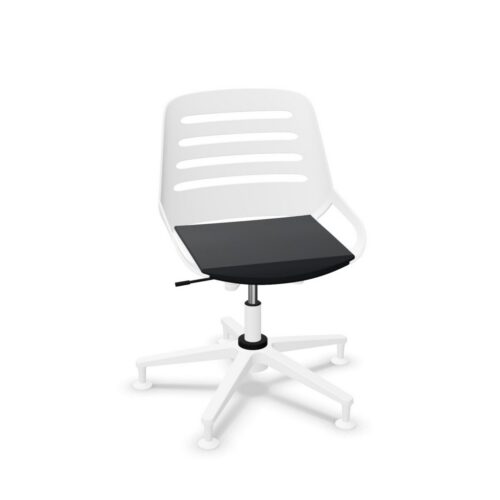
A white base may relate to a pale desk frame, although closely placed whites can reveal differences in tone. Compare the chair beside the actual furniture under the lighting used throughout the working day. Office chairs may look quite different when tucked beneath a desk and when pulled into the room. Check both views, including the outline against the floor. A white base with fixed backrest height describes color and vertical backrest positioning only. It does not identify the base material, surface treatment or upholstery. Verify those details directly if the room design depends on a particular finish.
Plan Seating Around the People Assigned to It
A known regular user can assess the fixed backrest position at the desk they will occupy. Where use will rotate, gather feedback from everyone expected to sit there. Matching office chairs can create visual continuity, but repeated appearance does not establish repeated fit. People may meet the same backrest at different points because their seated proportions differ. If one position does not suit a user, compare alternatives with a different backrest shape or adjustable back height. The white base requirement can remain part of that comparison without dictating an identical upper chair for every workstation.
