



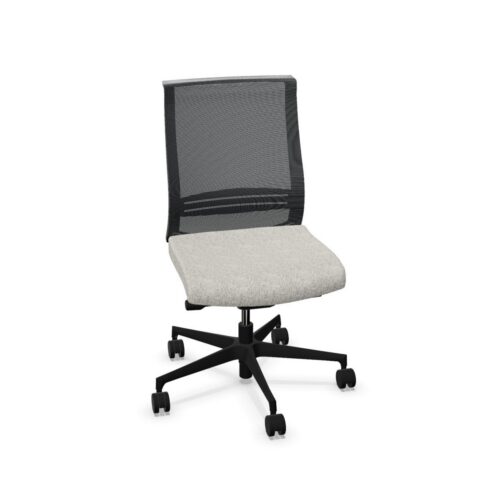
Make Seat Depth A Shared Routine
Silver base office chairs with adjustable seat depth are worth assessing with the people who will actually use them. Ask each person to sit back against the backrest and check how the seat supports their thighs without pressing against the backs of their knees. Change the depth according to the chair's instructions, then reassess their working position. The useful result is a setting that supports the user at the desk, rather than an adjustment left at its original position. A brief demonstration helps colleagues understand what this control changes and when to revisit it.
Assess Silver Beside Existing Finishes
The base sits close to desk frames, storage legs and flooring, so assess its silver appearance in that lower part of the room. Look at a sample under the lighting used during normal working hours. Compare office chairs beside existing furniture rather than judging the finish against an isolated image. Consider whether a consistent base colour matters across adjoining desks or only within individual rooms. Keep appearance and construction as separate questions: silver describes the selected appearance here, but it does not identify a particular metal, coating, structural design or maintenance method for the base.
Check Adjustment At The Workstation
When evaluating silver base office chairs with adjustable seat depth, keep the desk task constant while changing the setting. Ask the user to return to typing, reading or another representative activity after each adjustment. Check that they can reach the control and understand its operation using the supplied instructions. Record the available adjustment range if that information is provided, because the presence of adjustment alone does not establish its limits. Also check seat height, backrest configuration and arm support separately; none of those details follows automatically from the selected seat depth feature or silver appearance.
