

Fixed-Height Office Chairs Without Headrests

Fixed-height office chairs without headrests make the existing relationship between seat, desk and user central to the decision. The seat cannot be raised or lowered, and there is no headrest. Those facts leave several important questions open, including the actual seat height, backrest dimensions and any other available movements. Establishing the physical match at the intended workstation is therefore more useful than making assumptions from the overall appearance of the chair.

Approach the assessment as a room-planning exercise with individual participation. Identify where the seating will be used, which surfaces people will work at and who will occupy each location. Compare office chairs in those conditions, taking particular care where several colleagues share the same seat. A fixed seat height gives each person the same starting position relative to the floor, but their relationship with the desk can differ. Record those differences alongside the tasks involved before deciding which locations and users suit the configuration.

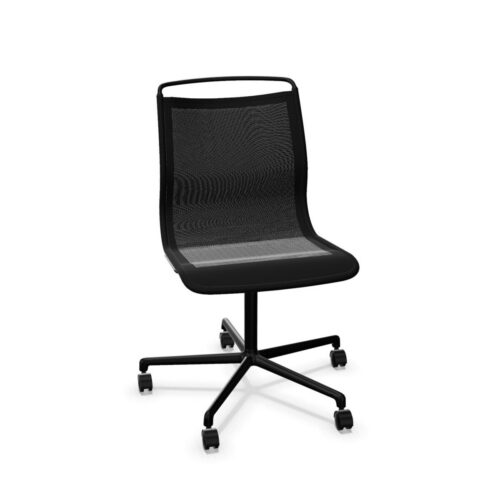
4 models
From €10.49 p/m
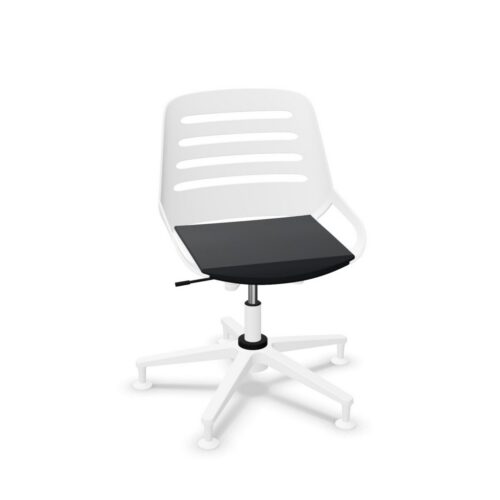
6 models
From €10.17 p/m
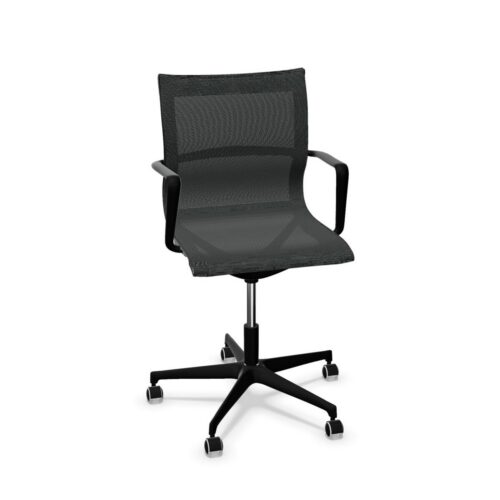
4 models
From €6.13 p/m
Price on request
7 models
From €7.54 p/m
2 models
From €17.75 p/m
4 models
From €17.65 p/m
5 models
From €13.67 p/m
4 models
From €28.11 p/m
€11.40 p/m
3 models
From €27.57 p/m
6 models
From €23.37 p/m

Map The Work Surfaces Before Assessing Seating

Begin with the desks, tables and other surfaces that define the intended working positions. Record their relevant dimensions and the activities performed at each one. Then position the chair where it will actually be used, rather than judging the seat height in an unrelated room. Compare office chairs against a consistent set of observations: access to the work surface, space for the legs and the person's contact with the floor. If the workstation itself can be adjusted, assess that possibility separately. Avoid assuming an adjustable desk is present or that it will resolve every mismatch between a fixed seat and its intended user.

Understand What Fixed Seat Height Establishes

Fixed-height office chairs without headrests remove seat-height changes from the setup process. They do not establish a single standard seat dimension, nor do they confirm the presence or absence of tilt, armrests or other features. Ask for the actual measurements needed for the room and verify any movements that matter to the task. Keep these findings distinct in the assessment record. Two chairs can share the same basic configuration while placing a person differently relative to the work surface. The useful comparison is therefore between their confirmed dimensions and observed fit, rather than between broad descriptions that leave those differences unexplored during selection.

Let Backrest Contact Inform The Room Assignment

Without a headrest, assessment should include the main backrest and how it meets the user during the intended activities. Do not infer its height from the absence of a separate head support. Ask each participant to sit naturally, reach towards their work and return to a resting position. Compare office chairs while noting the location of backrest contact and any tendency to sit forward to use the desk. Those observations can help identify a mismatch that a general comfort rating misses. Consider the chair and workstation together before assigning the seating to a particular room, desk or shared activity area within the workplace.

Plan Shared Use Around Individual Differences

Fixed-height office chairs without headrests deserve assessment by the people who will share them. A suitable position for one colleague does not establish the same result for someone with different body proportions. Include representative users and repeat the assessment at each relevant type of workstation. Where the chair fits some situations better than others, record the conditions rather than forcing a single verdict across every room. This gives office managers a clearer basis for allocation. It also helps distinguish a problem with a particular desk relationship from a broader mismatch between the chair dimensions and the people expected to use that seating regularly.

Questions About Fixed Seating Positions

Are all fixed seats the same height?

No. Fixed-height office chairs without headrests have no seat-height adjustment, but their actual dimensions must still be checked. Compare those measurements with the intended work surfaces and assess the resulting position with each user.

Does fixed height rule out other movements?

No. Seat-height adjustment is separate from other chair characteristics. Confirm any tilt, backrest movement or armrest adjustment individually, and avoid describing the entire chair as immovable solely because its seat height is fixed.

What if colleagues need different seated positions?

Assess each person at the relevant workstation and record the differences. Review available workstation adjustments or alternative seating configurations where the fixed seat height does not provide a suitable relationship for an intended user.

Explore related selections