



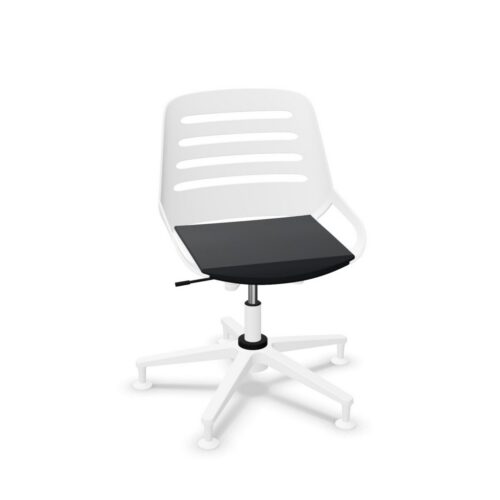


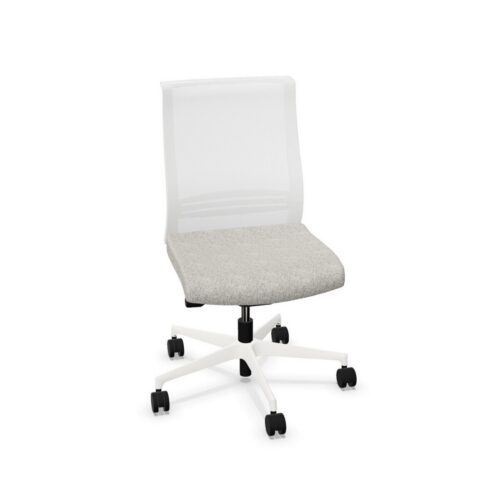
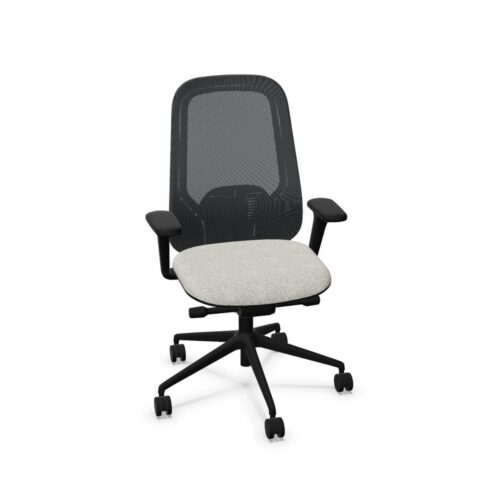
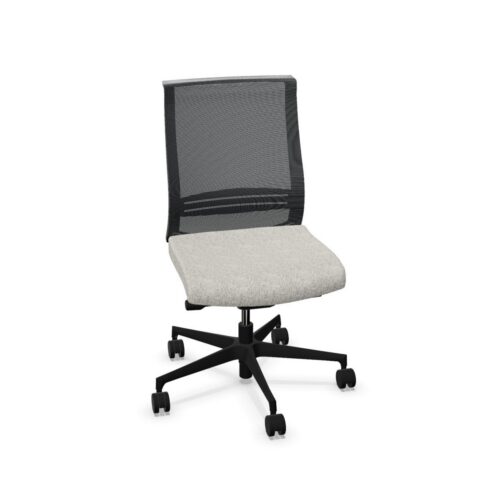


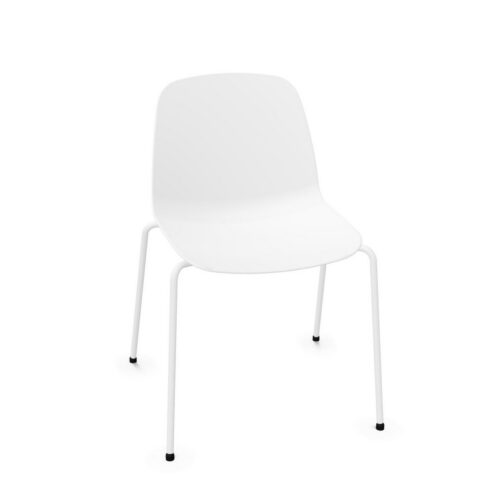
Start With The Seat And Desk Relationship
Set the assessment around the actual work surface rather than an isolated chair demonstration. Invite the user to adjust the seat height and check their access to the keyboard, documents and other frequently used items. Observe foot placement at the chosen setting and note any conflict between desk access and the position of the legs. Compare office chairs at equivalent workstations where possible. If a suitable arrangement cannot be found, investigate the chair's adjustment limits and the workstation dimensions together. A height control provides a way to change position, but its presence does not confirm that every desk relationship can be accommodated.
Assess The Backrest Without Assuming Its Height
Height-adjustable office chairs without headrests still require a separate assessment of the main backrest. Headrest absence describes one feature; it does not establish whether the backrest is low, tall, shaped or adjustable. Ask the participant to sit against it after setting the seat height, then describe where contact occurs during normal tasks. Watch for changes when the person reaches towards the desk or turns to speak with someone nearby. These observations help distinguish a seat-height issue from a backrest mismatch. Record the distinction clearly, because moving the seat vertically changes the person's position relative to the desk as well as the floor.
