


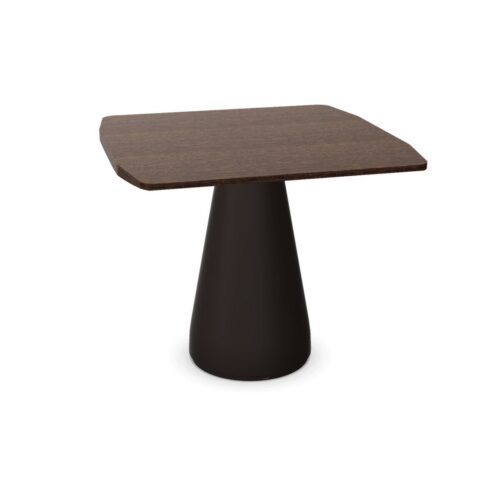


Planning lounge furniture with melamine bases and red surfaces
Use the red surfaces to establish a deliberate point of attention within the room. Start by viewing the proposed lounge from the entrance, the main walkway, and adjoining work areas. Decide whether people should notice the seating first or register it as part of a broader composition. This distinction affects placement as much as color choice. A centrally positioned group may become a visual landmark, while a group beside a wall may sit within a more contained arrangement. Keep the intended emphasis consistent across the approaches people actually use.
Distribute red with a clear purpose
Consider the existing red elsewhere in the interior before extending it into the lounge. Repetition can connect separate areas, but repeating the color at every opportunity can make the visual hierarchy less clear. Identify which existing elements should remain prominent and which can recede. Compare the red surface against nearby wall colors and flooring in the room's lighting. A shade that appears closely related in isolation may look distinct when placed beside another red. Decide whether the relationship should be an intentional match or an obvious difference, rather than an uncertain approximation.
Give the melamine base a defined role
When assessing lounge furniture with melamine bases and red surfaces, separate the base material from assumptions about its appearance. Melamine does not specify a particular base color, edge treatment, or frame arrangement. Examine how the actual base meets the red area and whether that junction supports the intended emphasis. A visually prominent base may create another element to coordinate; a less visible base may leave the red surface as the main feature. Review the furniture from seated viewpoints as well as standing ones, since the balance between those parts can change with the viewing angle.
