

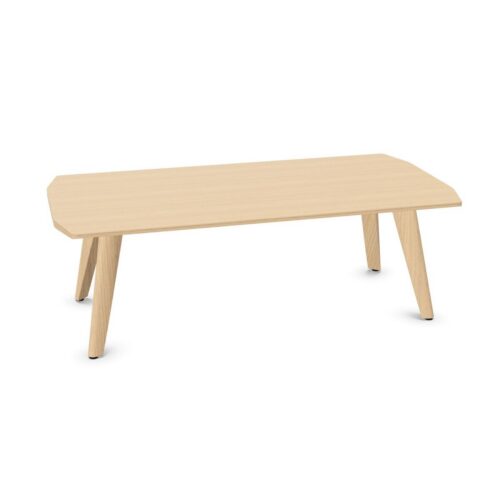
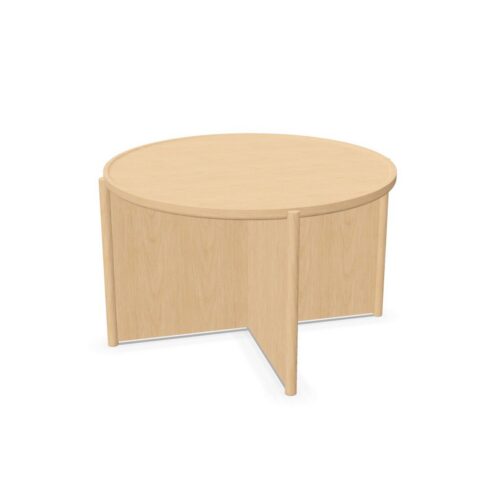
Rounded Table Tops With Wood Bases

Lounge furniture with rounded both sides tops and wood bases brings two distinct considerations into a lounge plan: the relationship between curved boundaries and seating, and the visible role of a wood support. This combination is worth considering where a table needs a clear orientation beside a sofa while introducing curves into an otherwise linear arrangement. Start with the actual top outline, since rounded sides alone do not establish the shape of every edge or corner.

For lounge furniture with rounded both sides tops and wood bases, assess the support separately from the surface above it. A wood base does not establish the top material, finish, or color. Look at how much of the base remains visible between seats, where its outer edges meet approach routes, and whether its position suits the intended seating arrangement. These checks help connect the selected shape and material to the room rather than treating them as isolated design details.

2 models
From €25.77 p/m
5 models
From €22.26 p/m
4 models
From €19.64 p/m

Planning Lounge Furniture With Rounded Both Sides Tops and Wood Bases

Begin with the direction of the seating group. Set out the sofa position, the principal approach, and any seats facing across the table. Then compare how the two rounded sides relate to those positions. They may face the main routes through the lounge or sit beside the seating, depending on the outline. Test both orientations before settling the arrangement. The useful question is whether the top boundary makes sense from every occupied seat and from the entrance to the group. A pleasing overhead composition still needs to work when viewed and approached at floor level.

Give the Wood Base a Clear Role

The wood base is a separate visual element beneath the top. Assess its outline and position rather than assuming a particular leg arrangement or appearance. If other wood elements are present in the room, decide whether the base should relate closely to them or remain visually distinct. Matching the material name does not guarantee a matching color or finish. Review the actual appearance alongside the surrounding interior. Also consider whether the base is exposed from the main approach or largely hidden behind the sofa; that changes its contribution to the overall composition.

Check Routes Around the Rounded Sides

When positioning lounge furniture with rounded both sides tops and wood bases, trace the route a visitor follows from the entrance to a seat. Include the movement needed to turn, sit, and leave again. Curvature should not be treated as evidence that a passage will work. The top and base each occupy space, and the support may meet the route differently from the surface above. Review the entire outline in relation to nearby seating and other furniture. Keep the main route understandable without requiring people to move through the center of a conversation group.

Compare the Relationship Between Top and Support

A useful comparison separates the shape above from the support below, then considers them together. Look for a coherent relationship between the rounded boundaries and the visible base. Avoid assuming that the base follows the same outline as the top. Examine the arrangement from the sofa, from an opposite seat, and from the room entrance. For lounge furniture with rounded both sides tops and wood bases, these views reveal different proportions and overlaps. Record which orientation best supports the intended seating pattern, then check that the same arrangement leaves the surrounding lounge clearly organized.

Frequently Asked Questions

Does rounded both sides mean an oval top?

It does not establish a complete oval outline. Check the whole perimeter, including the remaining edges and the transitions between them, before deciding how to orient the table.

Does a wood base mean the top is wood?

No. The stated material applies to the base. Evaluate the top separately and avoid carrying assumptions about material, color, or finish from one component to another.

Which side should face the main walkway?

Compare both orientations against the actual approach route. Choose the position that keeps the seating group legible and leaves a clear route around the complete furniture outline.

Explore related selections