


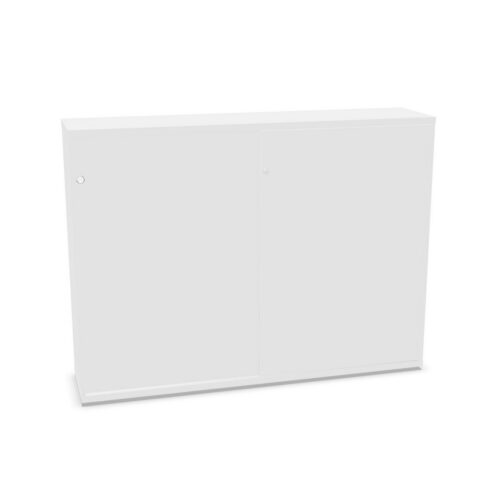


Compare the three shelf spaces
Check the product drawing for the position of each shelf and establish whether any can be adjusted. Three shelves can produce compartments of different heights, so do not expect equal spaces. Verify the usable depth and width for the model under consideration.
Measure binders, boxes, supplies or equipment and allow clearance for retrieving them. Read the stated loading guidance before arranging heavy contents. Shelf count alone is not a capacity rating and does not confirm how much weight each level can carry.
Review the plastic doors
Plastic identifies the door-material value in the filter. Consult the selected product page for exact construction, surface, colour, handles and hinges. Cabinet sides, back and interior may use different materials, so check the entire specification rather than generalising from the doors.
Allow enough space for the doors to open and for users to access the shelves. Follow the care guidance for the actual finish. If a lock or special hardware is needed, confirm the relevant feature in the individual model details.
Use the interior for organised storage
Give each shelf a clear purpose, such as supplies, active files or equipment. Keep frequently used materials at a practical height and label shared categories. Make sure items fit the documented clearances and do not press against the shelf above or interfere with closing the doors.
When filling the cabinet, follow loading instructions and distribute weight as advised. A quick contents review can remove outdated materials and keep commonly used items accessible. If the stored items change, reassess whether the three-shelf layout remains suitable.
Frequently asked questions
Are the three shelves equally spaced?
Not necessarily. Check the selected product’s interior drawing.
Does plastic refer to every panel?
No. It is the door-material classification.
How can I confirm the cabinet will fit?
Compare product dimensions and door swing with the room and contents.
