

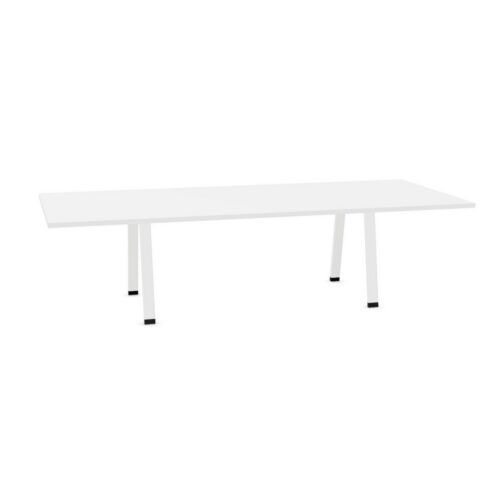
Blue Conference Surfaces With Fixed Height

Fixed-height conference tables with blue surfaces bring a clear color choice to a working level that remains unchanged. The combination calls for practical chair assessment alongside a decision about how prominently blue should feature in the conference room. It can be the main colored surface within a restrained palette or connect with blue elements already used in seating, walls, or other furnishings.

Begin with the room’s seated routine rather than color matching alone. People need a comfortable position for writing, discussing documents, and viewing shared information at the fixed tabletop. Then compare the actual blue with nearby finishes under everyday lighting. The color description does not specify a shade, material, or surface finish. Assess those characteristics independently, and plan the table’s position around conversation, presentation sightlines, and routes that remain usable while the chairs are occupied.

2 models
From €18.78 p/m
10 models
From €16.65 p/m
3 models
From €125.11 p/m
17 models
From €15.70 p/m
5 models
From €7.81 p/m
11 models
From €8.94 p/m
6 models
From €11.54 p/m
2 models
From €105.43 p/m
7 models
From €10.82 p/m
€65.77 p/m
2 models
From €85.07 p/m
2 models
From €81.39 p/m
2 models
From €62.69 p/m
€12.69 p/m
2 models
From €11.97 p/m
9 models
From €6.46 p/m
12 models
From €55.42 p/m
33 models
From €5.33 p/m
7 models
From €10.56 p/m
18 models
From €19.86 p/m

Planning Fixed-Height Conference Tables With Blue Surfaces

Decide how much of the room's visual attention the blue tabletop should carry. If it is the main colored element, compare it with the surrounding neutral finishes to judge the overall balance. If blue already appears elsewhere, look at those elements together rather than assuming that they share the same shade. Repeating the color can connect different parts of a room, but repetition is optional. A blue surface can also stand on its own. Assess the arrangement from the doorway and from a chair, where the relationship between the tabletop, upholstery, and walls will be more immediate during everyday meetings.

Confirm That Chairs Suit the Seated Tasks

The working level remains fixed, so the chairs need to support the activities expected at the table. Consider note-taking, reading, and laptop use when reviewing the seated position. Check whether participants can approach the edge naturally, including the effect of armrests where present. Feet should remain supported, and any seat adjustment should be assessed in relation to the unchanged tabletop. It may be tempting to coordinate chair upholstery directly with blue, but practical compatibility should lead. Once that relationship is suitable, decide whether matching, related, or contrasting upholstery gives the room the visual arrangement you want without complicating the palette.

Compare Blue Under the Room's Normal Light

Fixed-height conference tables with blue surfaces deserve a color comparison in the setting where they will be used. Daylight, artificial lighting, and neighboring finishes can influence how the blue appears. Where a close relationship with another blue element matters, assess both under the same conditions. Do not use color as a shortcut for predicting reflectivity or texture. Review the actual surface and the position of light sources from seated viewpoints. If the room includes shared presentations, check that the proposed orientation supports both the tabletop tasks and the display view, so visual coordination does not become the sole reason for choosing a position.

Keep the Colored Focal Point Within a Usable Layout

A blue tabletop can define the meeting area visually, while the furniture arrangement must support how people move and interact. Trace the route from the entrance to the chairs and check movement behind occupied seats. Include access to any storage or presentation area used during discussions. Consider whether the usual meetings rely mainly on conversation or on looking toward shared information, and orient the setting accordingly. The absence of table height adjustment means the room should be planned around a consistent seated working level. Where workplace activities call for another level, account for those needs in the wider arrangement rather than overlooking them.

Frequently Asked Questions

Must the room include other blue furniture?

No. The tabletop can be the main blue element, or it can connect with existing blue finishes. Compare the complete palette and decide how much repetition is useful without assuming that every colored element should match.

Does blue identify a specific shade or finish?

No. Blue is the selected surface color description. Assess the actual shade, material, and finish separately, especially when coordination with existing furnishings or the relationship with meeting-room lighting is important to the choice.

How should an existing room be assessed?

For fixed-height conference tables with blue surfaces, review the existing chairs against the unchanged working level first. Then compare the blue with surrounding colors and check whether circulation and shared viewing remain practical in the proposed arrangement.

Explore related selections