



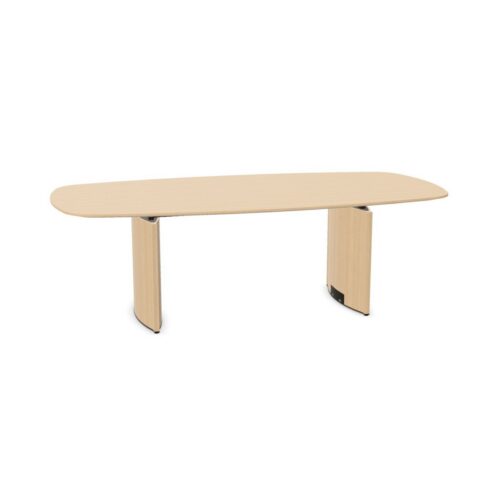


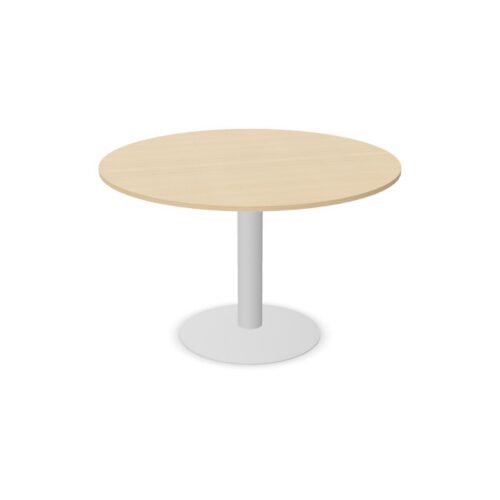
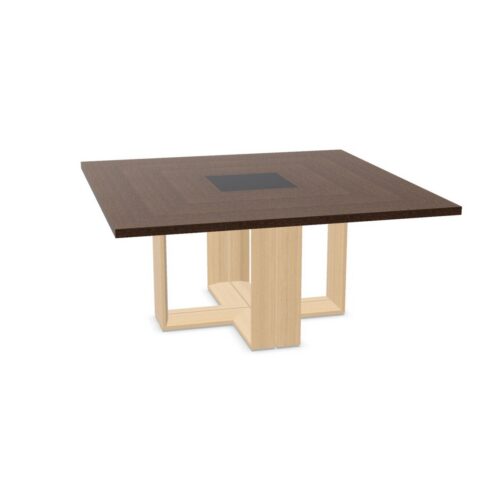


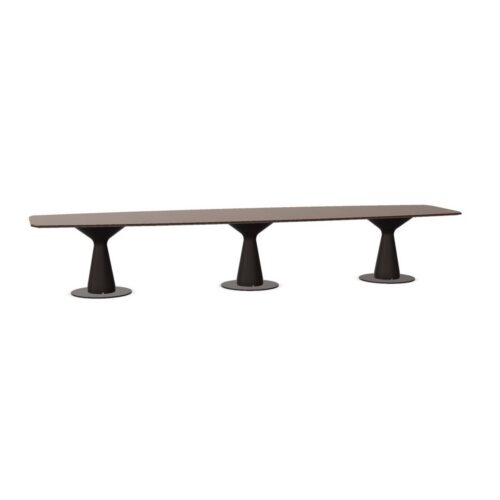


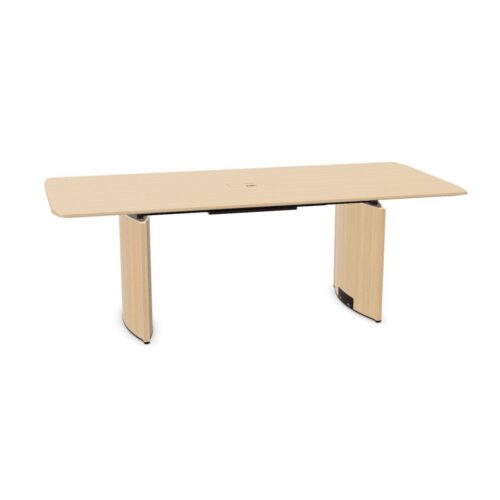


Coordinate Oak With the Materials Already Present
Review the tabletop alongside the room elements that will remain: seating, cabinets, doors and flooring. Consider whether the actual oak appearance relates comfortably to those surfaces or creates a deliberate visual distinction. Avoid assuming that different items described as oak will necessarily look alike.
The material choice does not establish a specific tone, treatment or construction. Examine those details separately before deciding how closely other furniture should coordinate. Keeping the surrounding palette considered allows the oak top to have a clear place in the room without requiring every visible surface to match.
Seat Planning for Fixed-Height Conference Tables With Oak Tops
The working level cannot be adjusted, so assess the intended seating in relation to it. Consider the way participants approach the table, use documents and move their chairs. Review chair arms and the available approach beneath the surface using the actual furniture arrangement.
Think about different users rather than planning only around a familiar chair position. A fixed-height oak conference table needs a seating plan that supports the room's intended activities at its established level. If another working level is essential to those activities, address that requirement before the layout is finalized.
