



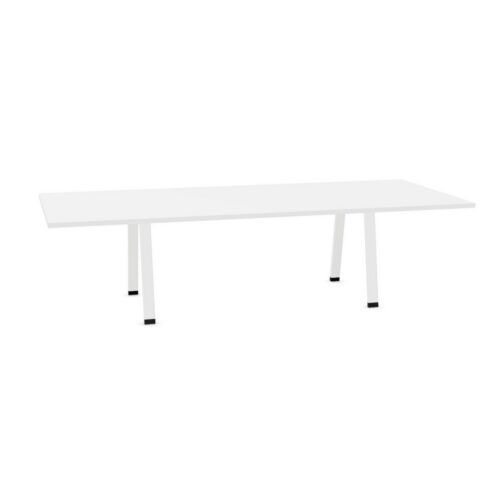


Plan Recurring Work Around Fixed-Height Conference Tables With HPL Tops
Start with the meetings the room hosts most often. Identify whether participants primarily discuss, write, read shared documents or follow a presentation. The table's working level will remain the same across these activities, so assess how the seating and room arrangement support each task.
Consider how the room changes between sessions. A different discussion format may call for repositioned chairs or reorganized materials without requiring another tabletop level. If an activity does require a height change, recognize that need before establishing the room around a fixed-height HPL conference table.
Review Chairs and Shared Viewing Together
Chair compatibility involves more than whether chairs can be placed around the table. Review how people approach the surface, where their arms sit and how they turn toward other participants. The established table level makes these relationships particularly important when existing seating will remain in use.
Include the shared viewing direction in that review. A participant following a display should still have a practical relationship with papers or notes on the HPL top. Arrange seating and presentation equipment together so the room's main activities do not compete for attention or require repeated furniture changes.
