



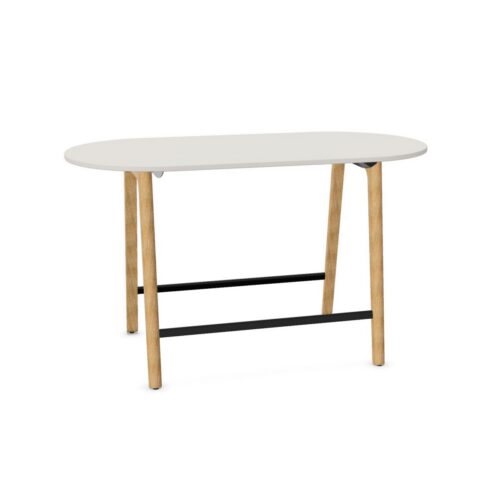

Placing conference tables with oval tops and yellow bases
Use the room's activity routes to establish an initial position. Identify the approach from the doorway, access to shared materials, and the path to any presentation or writing surface. Then arrange the oval table so those routes can work with occupied chairs. Pay attention to the curved ends, where seating direction changes and movement may converge near an entrance. Review the layout as someone joining a meeting would experience it. A position that looks balanced from the doorway still needs to let participants reach a chair without interrupting the group or blocking another person's route through the room.
Judge yellow against adjacent colors
Look first at the surfaces and furniture closest to the base. Flooring and chair frames provide immediate color relationships, while walls and storage form the wider setting. Decide whether yellow should be an isolated accent or connect with a detail already present. Its appearance should be reviewed under the lighting normally used for meetings, including the viewpoints from which people will see it. Avoid assuming that the color creates a particular mood or improves working performance. The useful decision is how deliberately it fits the interior and how its visibility changes once the chairs are arranged around the table.
