



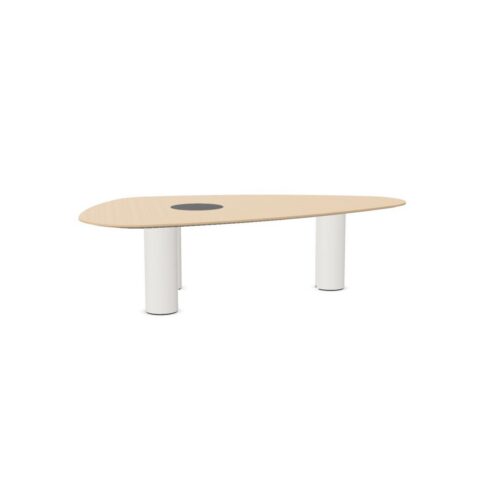

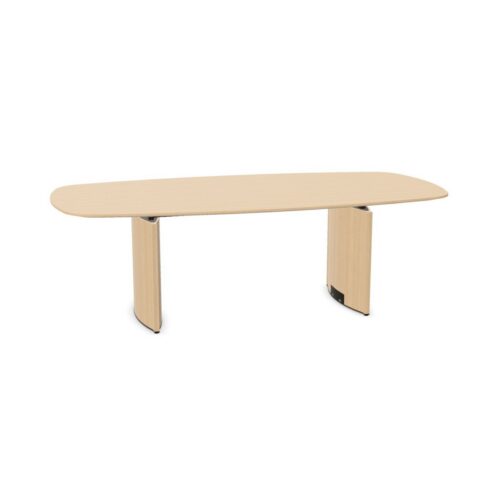


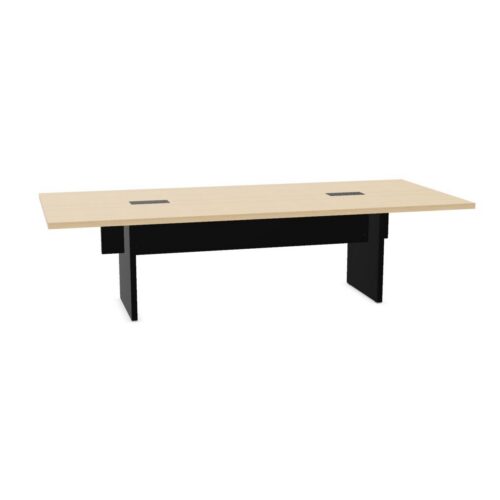


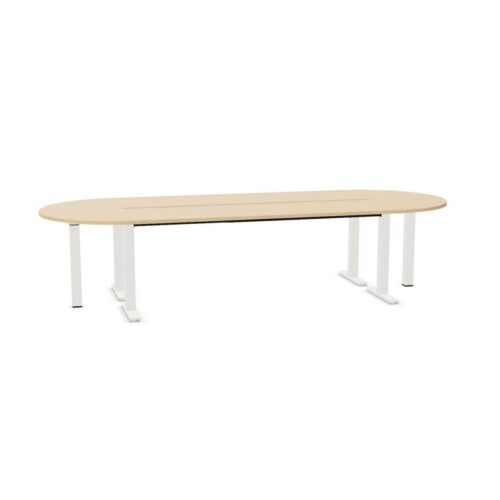



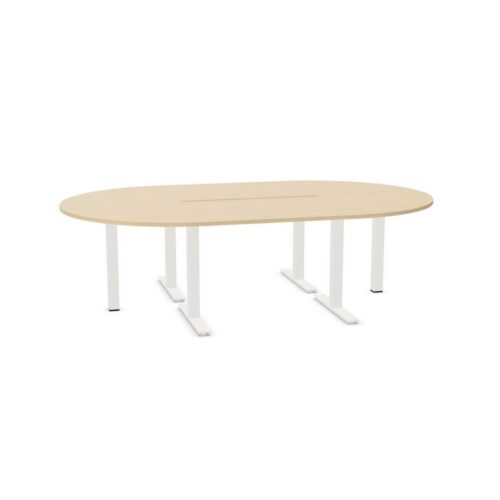





Coordinating conference tables with oval tops and grey surfaces
Compare the surface with the gray elements already in the room, if any. Flooring, upholstery and walls may look related in isolation yet differ when seen together. Decide whether the table should continue an existing tone or provide a deliberate distinction. Include adjacent colors in that judgment, since gray is seen in relation to its surroundings.
Gray oval conference tables do not need an entirely gray setting. Colored chairs or walls can form part of the scheme if their relationship with the surface is considered. Review the combination from normal room viewpoints rather than deciding from a close view of the tabletop alone.
Organize access to shared room functions
Identify the places people use during meetings: the display, writing area, storage and entrance. Each creates a route around the table. Position the oval outline so these journeys remain practical with chairs occupied. In particular, check whether accessing shared equipment requires someone to pass directly behind a seat that is already difficult to leave.
Review simultaneous activities too. A participant may approach the writing wall while another leaves the room. The arrangement should account for these ordinary overlaps. Do not assume the curved ends provide an adequate route without considering the chairs, their movement and any belongings placed beside them.
