








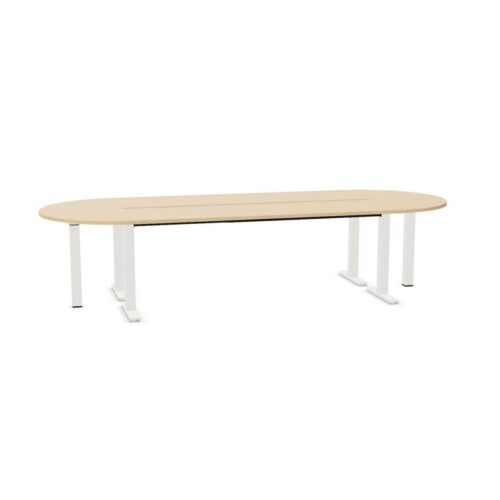








Comparing conference tables with oval tops and white surfaces
Review the white surface in the context of the complete room. Nearby white walls or storage can make differences in tone more apparent, so assess them together under the lighting used for meetings. Consider whether the table should blend with these elements or stand apart through its relationship with darker or colored seating.
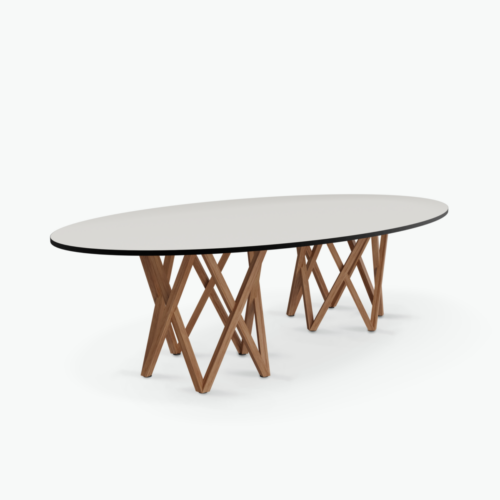
White oval conference tables provide a specific combination of color and outline, but those properties leave other questions open. Do not infer reflectivity, surface texture or construction from white alone. Establish the visual relationship first, then confirm the separate characteristics needed for the room's everyday activities.
Arrange chairs for the rounded perimeter
Start with how participants need to face one another. Around an oval top, positions near the ends turn with the outline rather than following the same direction as seats along the sides. Place chairs accordingly and review whether each person can join the conversation without repeatedly changing position. A visually balanced layout still needs this practical check.
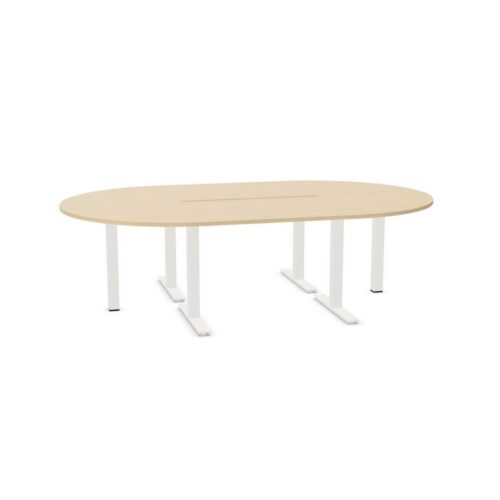
Then examine the relationship between the chairs and the supports beneath the table. The selected outline does not establish the frame design. Check the intended seating pattern against the actual support positions, including the places where chairs approach the curved ends and where participants are likely to move their feet.
