

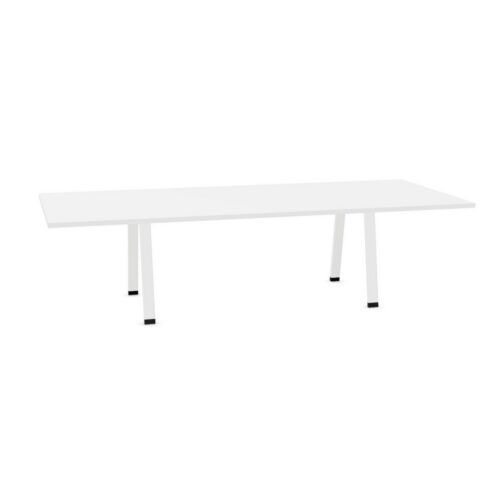
Round White Tables for Conference Conversations

Conference tables with round tops and white surfaces combine a continuous seating edge with a clear, light color choice. The circular shape offers no fixed head position, making it useful to consider when conversation should move around the group. White gives the tabletop a visible relationship with nearby walls, chairs, and flooring. The result depends on how those elements are arranged, so plan the seating pattern and the surrounding contrast together.

Round white conference tables need room planning that follows the full perimeter. Check the paths behind occupied chairs, the view toward any presentation screen, and the location of doors or storage used during meetings. In a predominantly white interior, compare the tabletop against its background so the meeting area remains easy to read. Where the surroundings are darker or more colorful, consider how much emphasis the white circle should carry within the room’s overall composition.

9 models
From €22.04 p/m
€9.29 p/m
€9.94 p/m
2 models
From €9.51 p/m
2 models
From €10.48 p/m
4 models
From €7.81 p/m
2 models
From €8.94 p/m
4 models
From €9.16 p/m
3 models
From €12.30 p/m
€12.46 p/m
2 models
From €6.14 p/m
4 models
From €6.03 p/m
5 models
From €20.67 p/m
3 models
From €22.04 p/m
3 models
From €21.01 p/m
2 models
From €19.64 p/m
3 models
From €14.84 p/m
4 models
From €22.73 p/m
2 models
From €20.67 p/m
2 models
From €17.92 p/m
24 models
From €57.27 p/m

Conference Tables With Round Tops and White Surfaces for Dialogue

A circular top allows seating to follow a continuous edge rather than a set of sides and ends. Use that geometry to consider how participants will face one another during discussion. Decide where the facilitator will sit, but avoid assuming that the room needs a permanently designated leading position.

Place typical meeting materials where the group expects to use them. A shared document at the center creates a different working pattern from individual laptops around the edge. Review how those activities affect sightlines between participants and whether the arrangement still feels coherent when everyone has their usual materials in place.

Define the White Circle Against Its Background

Look at the tabletop from the doorway with walls and flooring in view. White may sit close to other light surfaces or contrast with darker surroundings. Decide which relationship suits the room, then use chair color and placement to help define the meeting setting without introducing unnecessary competing elements.

In an interior with several white surfaces, pay particular attention to the visible boundary of the table. Review it in ordinary daylight and under the lights used for meetings. The purpose is to understand the actual color relationships, rather than assuming that all white elements will look identical when brought together.

Arrange Chairs Before Positioning Storage

Round conference tables with white surfaces work best when the full seating arrangement is considered before nearby furniture is placed. Mark the intended chair positions mentally around the circle, including where people enter and leave. A clear route to an empty seat should not depend on other participants standing up.

Then review cabinets, presentation equipment, and any shared supplies. Their access routes may cross the space behind chairs even when the table appears neatly centered. Adjust the position according to these daily tasks. Visual symmetry can be useful, but it should follow an arrangement that people can navigate comfortably during an active meeting.

Check Presentation Views Around the Curve

A round top does not give every seat the same relationship to a wall display. Some participants may face it directly while others turn to follow the presentation. Review these positions before deciding where the table belongs, especially when the room alternates between group discussion and screen based sessions.

Assess the white surface under the lighting used for those sessions as well. Color alone does not tell you how a tabletop will reflect surrounding light. Look from seated positions while typical documents and devices are present, and consider the combined view of the tabletop, display, windows, and other bright areas in the room.

Keep conference tables with round tops and white surfaces in view while comparing placement, access and the surrounding interior.

Compare how conference tables with round tops and white surfaces relates to chair positions and shared views in the intended room.

FAQ About Round White Meeting Tables

Does a round table need a fixed leading seat?

No fixed leading seat is created by the shape itself. A facilitator can sit where the agenda and presentation setup make sense. If the room is mainly for discussion, choose a position that supports contact with the group and access to shared materials.

How can a white tabletop remain visually distinct?

Compare it with the floor, walls, and chairs under ordinary room lighting. Differences in surrounding color can help define the circular boundary. Review the complete setting from the entrance as well as from a seat before deciding how much contrast is appropriate.

Should the table sit exactly in the room's center?

Only when that position supports the room's activities. Door access, occupied chairs, storage use, and screen views may justify another placement. Check those relationships together instead of using the room's geometric center as the sole guide.

Explore related selections