



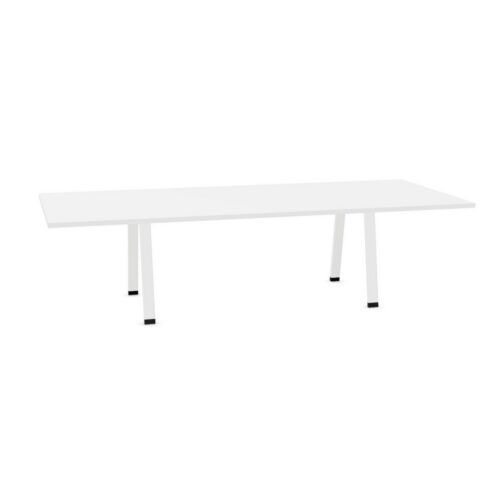


Orient Conference Tables With Rectangular Tops and Blue Surfaces
In a presentation room, start with the relationship between the display and the opposing sides of the table. Consider how participants turn toward shared content and how they return to face-to-face discussion. An end position may suit the presenter, but it should follow the meeting routine rather than become an automatic choice. The blue surface adds a visible color element within that layout. Decide on orientation before coordinating accessories, because an attractive color arrangement cannot compensate for seating that repeatedly draws attention away from the screen or other participants.
Give Blue a Clear Role in the Palette
Blue rectangular conference tables can establish the main accent in a room or connect with blue elements already present. Choose which role you want before adding further colored furniture. If a wall, artwork or chair group already carries a strong color, compare it directly with the tabletop. Similar blues need not match exactly, but the relationship should look intentional. Neutral surrounding elements can leave the tabletop as the main color reference. A more varied palette needs careful comparison from the entrance and from the positions people occupy during meetings.
Check Movement During Screen-Based Sessions
People may need to reach controls, close a door or retrieve materials while others are watching a presentation. Trace those movements around the rectangular perimeter with chairs occupied. Pay attention to corners that fall between the entrance and equipment. A rectangular meeting table with a blue surface still needs a practical route around the active meeting area. If cables are required, plan their path separately without assuming the table includes any provision for them. Keep that path coordinated with chair access and the movement of whoever presents or supports the session.
