



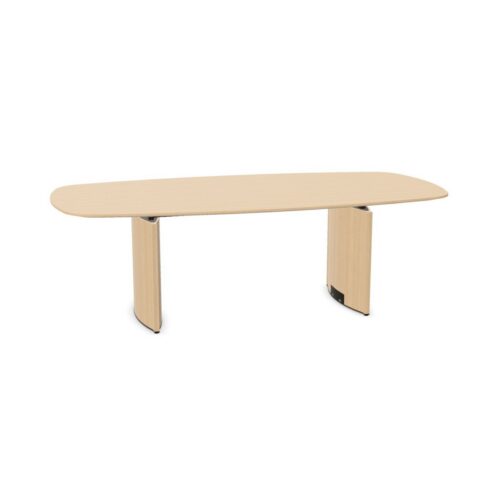


Conference Tables With Rectangular Tops and Gold Surfaces in Context
Decide how prominent the table should be within the room. A gold surface can be treated as the main color feature or connected to other warm tones already present. Review it alongside the largest surrounding areas first, especially flooring and walls, before coordinating smaller objects or decorative details.
The rectangular top contributes its own visual order through straight edges and distinct ends. Aligning those edges with the room's main architectural lines can create a deliberate arrangement. An alternative orientation may support a different presentation direction, but confirm that the resulting chair positions and walking routes remain straightforward for regular use.
Set the Seating Pattern Around the Agenda
A rectangle offers several ways to organize a meeting. An end position may suit a facilitator, while seating along the sides can support discussion across the surface. Decide whether the room needs a consistent presentation direction or a more balanced arrangement where participants address one another throughout the session.
For document reviews, consider where shared papers will be placed and how participants will refer to them. For screen presentations, assess turning positions along both sides. The gold color defines the tabletop visually, but the rectangular shape and its orientation do the practical work of organizing these different meeting activities.
Evaluate Gold Under Everyday Lighting
View the surface under the conditions the room actually uses. Daylight, overhead lighting, and presentation settings may change how its color appears against neighboring finishes. Compare the surface with chair upholstery and flooring at the same time, since isolated color decisions can look different once the room is fully arranged.
Gold describes the selected surface color; it does not establish a particular material or degree of shine. If reflections matter for reading documents or viewing a screen, examine them directly. Review the table from seated eye level and from the doorway so that both working conditions and the overall appearance inform the decision.
