



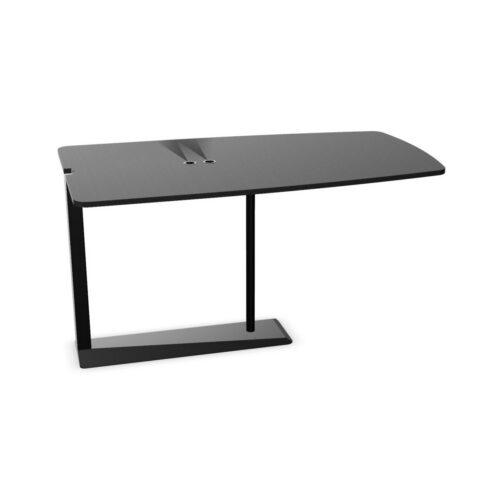


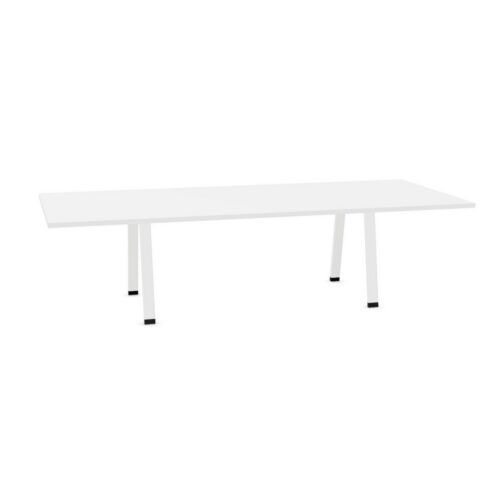


Assessing Conference Tables With Rectangular Tops and Black Surfaces
Start with the tabletop's relationship to the floor and chairs. If several surrounding elements are also dark, consider how clearly their outlines remain separate in the overall room view. If the surroundings are lighter, assess whether the resulting contrast suits the intended composition. Neither approach requires matching every furnishing. Include ordinary papers and devices when making the comparison, because a working surface is rarely seen as an uninterrupted color during meetings. Black does not establish a particular sheen, material or maintenance requirement, so keep those assumptions out of the visual and spatial planning process.
Choose a Direction for Presentation Meetings
The straight sides and separate ends of a rectangle create distinct viewing positions. Decide where the display or speaker will be, then assess the turn required from each proposed chair. A side seat facing another participant may work well for discussion while needing a different orientation during a presentation. End positions should also be reviewed for their view and relationship with the presenter. Keep a practical standing area beside the presentation point. If the room alternates between discussion and screen use, choose an orientation that makes both activities workable without blocking access to regular seats.
Manage Movement at the Table Corners
Rectangular conference tables with black surfaces need a circulation plan that includes the corners and the chairs nearby. Follow the route taken by someone arriving after the meeting starts. Check whether they can reach a place without squeezing behind occupied chairs or stepping through another participant's work area. Consider a person leaving temporarily as well as entering. Access to storage should remain practical when the room is in use. Keep bags out of the turning points around the tabletop, where they can make an otherwise direct route less convenient for everyone using the space.
