



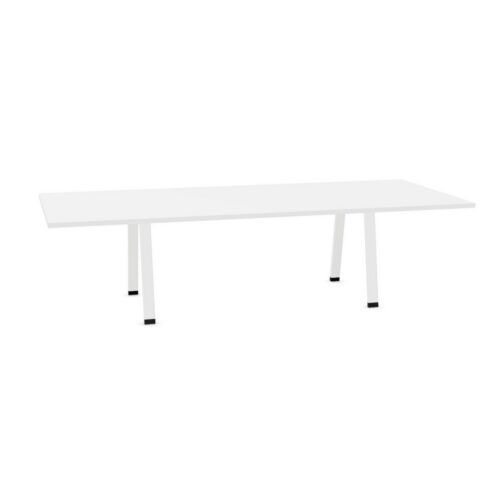


Conference Tables With Rectangular Tops and Brown Surfaces
For meetings that involve reviewing documents across the table, the rectangular outline offers a straightforward way to organize opposing work areas. Establish where individual papers belong and where shared reference material will be placed. The brown surface becomes the background to that activity, so assess its appearance alongside the documents and objects used in your meetings. Avoid assigning a material or grain pattern to the color description. Brown rectangular conference tables can suit a coordinated room plan without requiring assumptions about how the tabletop is constructed or finished.
Relate Brown to Existing Architectural Colors
Doors, storage and flooring often provide the strongest starting points for choosing brown meeting furniture. Compare the tabletop color with those fixed elements before introducing further brown furniture. Similar shades may work together, but an approximate match can look accidental when the elements sit close together. An intentional contrast can be easier to coordinate. Consider the table as part of the full view from the entrance, including the chairs around it. This broader view helps you decide whether brown should connect existing features or become a separate visual element.
Arrange Seating Around the Meeting Agenda
A rectangular conference table in brown can support different meeting formats through its placement and chair arrangement. Discussion across opposing sides calls for a different focus from a presentation directed toward a wall. Think through the agenda before treating an end position as the obvious place for the meeting leader. If papers regularly move between participants, check that their route across the surface remains practical. Keep personal belongings away from the approaches to chairs so the orderly tabletop arrangement does not create obstacles around the meeting area's perimeter.
