



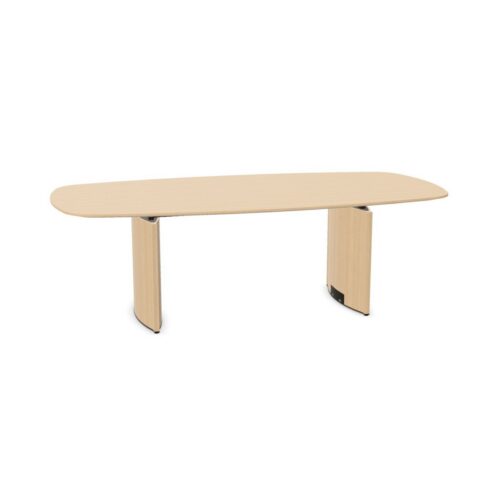

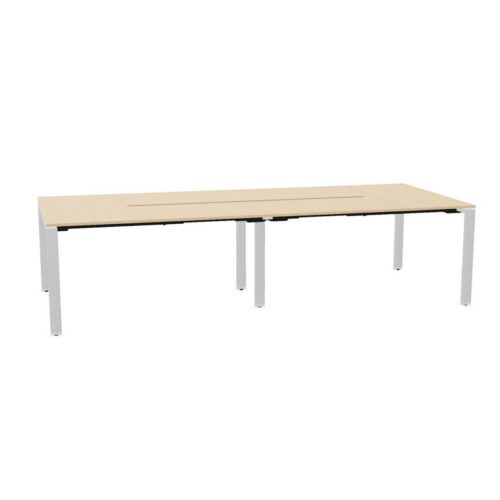
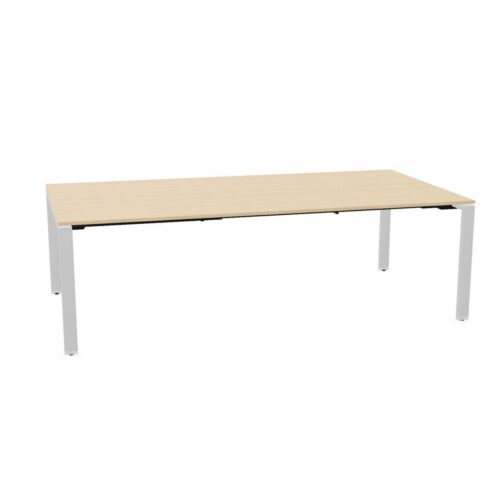
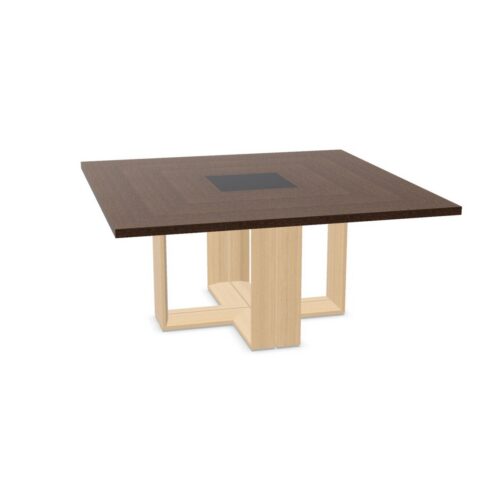


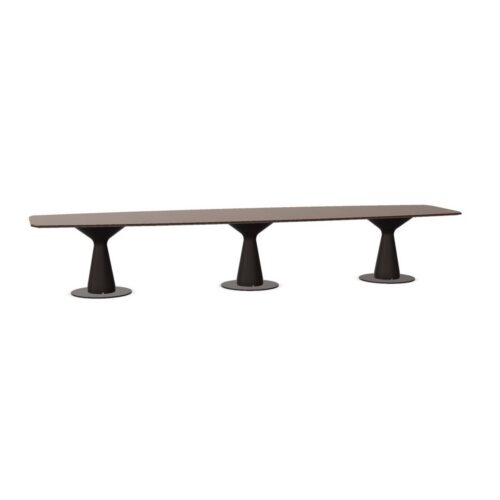


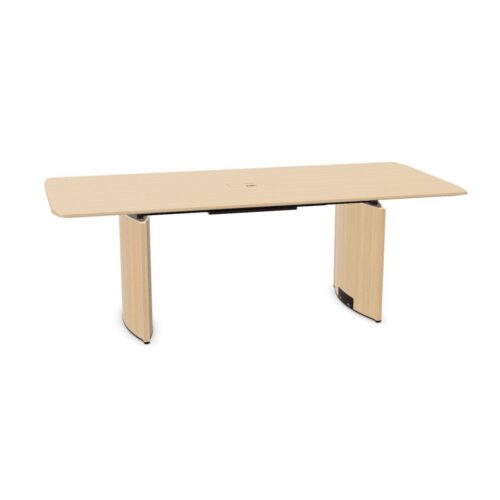

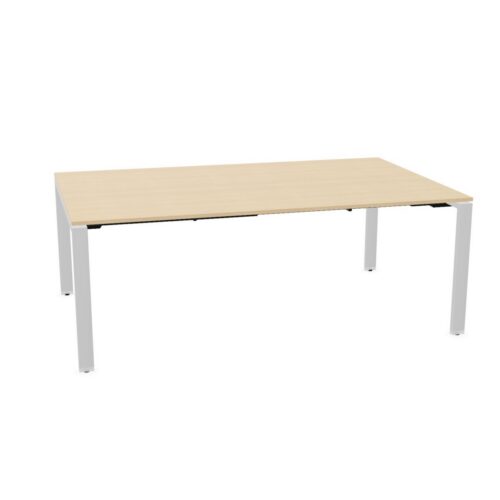


Coordinate conference tables with rectangular tops and oak tops
Review the tabletop alongside the room's existing wood furniture before deciding how closely the surfaces should relate. Oak does not establish a particular color or guarantee a match with another piece. The rectangular outline introduces a separate visual consideration: straight edges can be aligned with room elements, but the occupied seating arrangement must remain part of the decision. Compare possible placements with chairs included and consider the table from the entrance. Choose a relationship that gives the meeting surface a clear role among storage and other furniture, while leaving the room's movement routes understandable to people entering it.
Decide how sides and ends share responsibility
A rectangular plan can give end positions a distinct role, yet the meeting format should determine whether that is useful. A facilitator might sit at an end, or the group may place shared reference material there. Consider how either choice affects participants seated near the corners. Rectangular oak conference tables deserve an arrangement in which each position supports the discussion rather than merely completing the outline. Review how people face one another and where personal papers sit. If the room is used for presentations, check screen views independently so that a conversational arrangement does not conceal an awkward viewing position.
Reserve the oak surface for active meeting work
Decide what needs to remain on the tabletop throughout a session and what can be placed elsewhere. Reference packs, personal notes and the document under discussion have different roles. Keeping those roles clear helps prevent the corners and ends from becoming unplanned storage areas. Arrange active papers so that neighboring side and end seats do not compete for the same working space. Pass documents when necessary instead of expecting participants to reach across occupied areas. This approach treats the oak tabletop as a working surface whose rectangular outline helps organize the meeting, while keeping its material presence visible within the room.
