

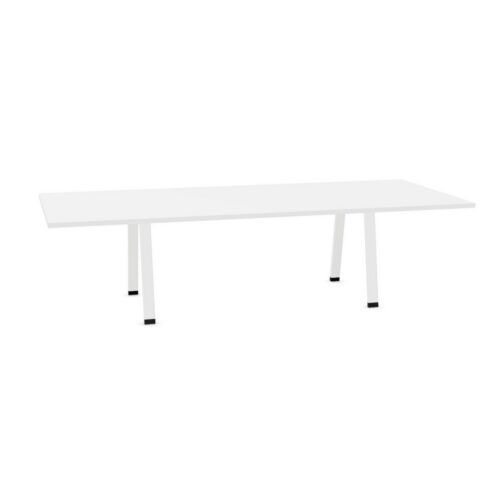
Rectangular HPL Tables for Meeting Workflows

Conference tables with rectangular tops and HPL tops combine a straight-edged meeting outline with an HPL tabletop. This pairing makes it useful to decide how the room will support different stages of a meeting: facing colleagues, reviewing documents and turning toward a presentation. The rectangular perimeter gives side and end positions clear identities, while HPL identifies the chosen surface material without establishing further features or a particular finish.

Rectangular HPL conference tables need an arrangement that connects those positions to the room’s working routine. Start with the presentation direction where relevant, then check how participants share the tabletop when the screen is no longer the focus. Leave practical routes behind occupied chairs and give corners a considered role. Assess the actual HPL surface against surrounding furniture so that the room’s visual scheme and its meeting workflow are developed together from the start.

2 models
From €18.78 p/m
10 models
From €16.65 p/m
9 models
From €22.04 p/m
18 models
From €27.49 p/m
2 models
From €10.48 p/m
2 models
From €30.93 p/m
7 models
From €23.33 p/m
€42.11 p/m
2 models
From €53.77 p/m
2 models
From €25.99 p/m
3 models
From €2.77 p/m
2 models
From €227.52 p/m
28 models
From €18.24 p/m
15 models
From €16.44 p/m
2 models
From €99.30 p/m

Orient conference tables with rectangular tops and HPL tops

A rectangular outline provides clear directions for arranging a meeting, but the room's activities should determine which direction takes priority. Identify where participants look during a presentation and how they face one another during discussion. Map both conditions around the intended chair positions. An end seat facing the group may have a different viewing relationship with the screen than a side seat. Include that distinction before fixing the table's orientation. Treat the HPL surface as the selected tabletop material within this plan, then assess its actual appearance alongside the room instead of assuming the material dictates the arrangement.

Divide the tabletop by meeting activity

Document review and presentation notes do not always need the same part of the surface. Keep individual papers beside their users and identify where the group will place active reference material. Along a rectangular perimeter, straight edges can help organize these working positions, while corners require closer attention to neighboring seats. Rectangular HPL conference tables should be considered with the meeting in progress, including papers being passed and chairs turned toward a speaker. Avoid letting unused materials accumulate at an end that someone needs for participation. A clear arrangement supports the sequence of tasks without assigning every open area a competing purpose.

Evaluate the material without assuming extra features

HPL identifies the tabletop material, leaving other details to be assessed separately. Do not let the designation stand in for a decision about color, surface appearance or supporting structure. Compare the actual tabletop with fixed furniture, wall finishes and chairs. In a room organized around straight lines, decide whether visual continuity or a distinct meeting surface better supports the interior. Look at the surface from occupied positions as well as the entrance. This makes the material comparison part of the working environment rather than a separate decorative choice made without regard to how colleagues use the table.

Keep the route to the presentation area open

When a participant needs to stand beside a display, the route from the table should remain clear of occupied chairs and shared materials. Follow that journey from side and end positions, especially where a corner meets the main circulation path. Consider the return journey too, when someone sits down while discussion continues. Supporting furniture should not force the speaker to cross between the display and the audience unnecessarily. Check the same routes during arrival and breaks. A useful rectangular arrangement accounts for movement around the perimeter as carefully as it organizes the people seated along it.

Questions about rectangular HPL meeting arrangements

Should the screen face a table end?

That can provide a clear presentation direction, but it should be checked against every occupied position. Review the view from end seating as well as both sides. Choose the relationship between table and screen around actual meeting use, rather than relying on room symmetry.

What should be checked beyond the HPL material?

Assess the actual appearance and any other details relevant to the room individually. The material designation does not establish additional features. When considering rectangular HPL conference tables, keep the seating plan grounded in the rectangular outline and the surface information that is actually available.

Where can shared paperwork be placed?

Choose an area that participants can use without displacing personal notes or competing with corner seating. Move documents between colleagues when needed. Keep material away from an end used for presentation access so that standing up does not require clearing the tabletop first.

Compare how conference tables with rectangular tops and hpl tops relates to chair positions and shared views in the intended room.

Assess conference tables with rectangular tops and hpl tops alongside circulation and the meeting's main viewing direction.

Explore related selections