



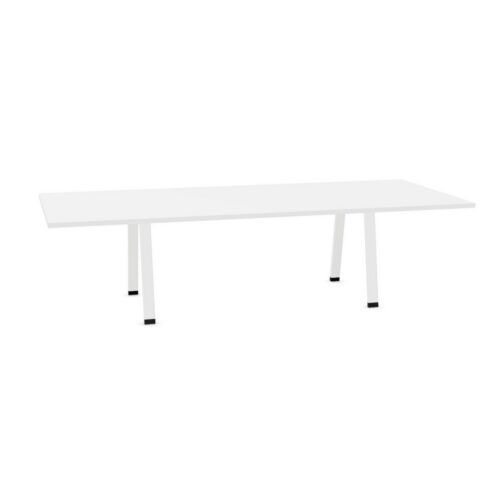


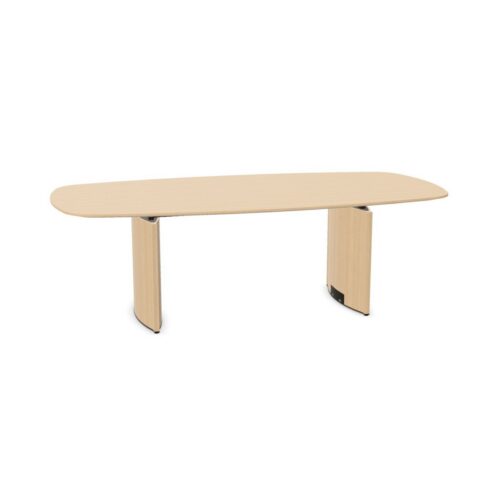


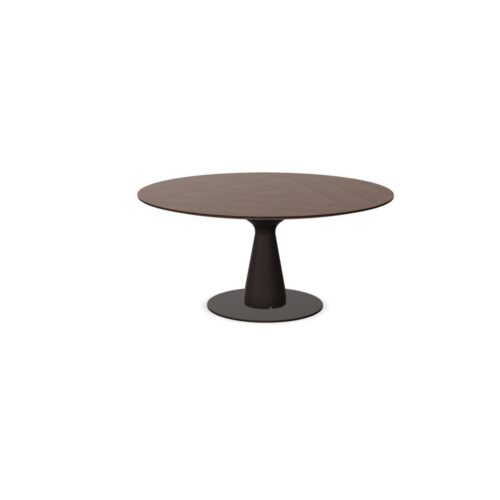


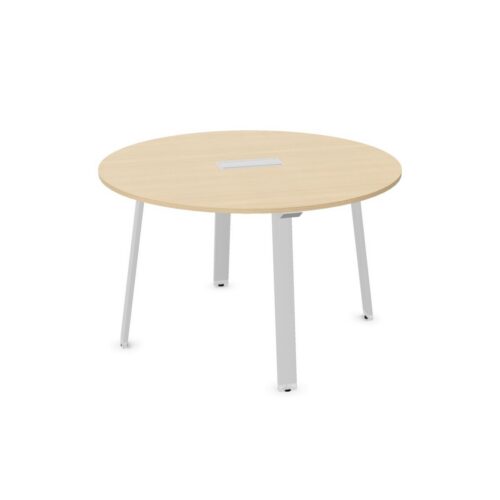

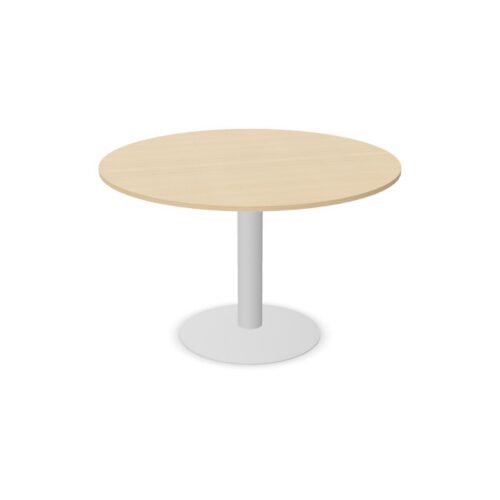
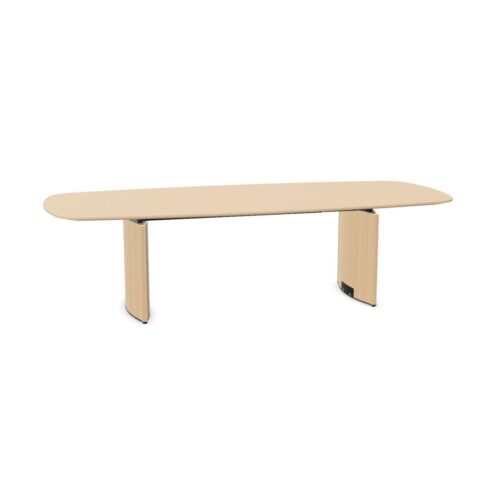

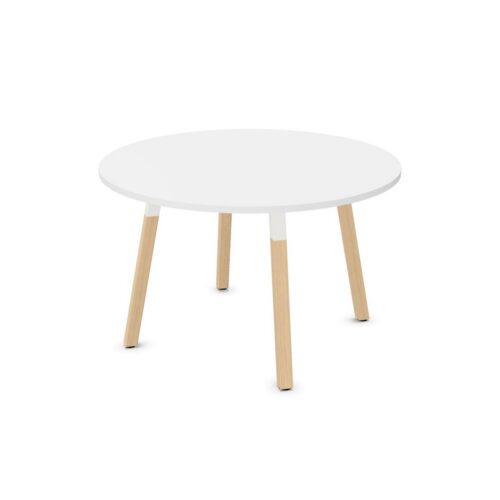
Place Conference Tables With Round Tops and White Bases
Start at the doorway and trace the approach to the meeting area. A round perimeter offers several possible seating orientations, so choose chair positions that make arrival straightforward. Avoid placing a chair where it repeatedly interrupts the main route through the room. Check access again when participants have pulled their seats back. The absence of tabletop corners is useful to recognize, but it does not remove the need to plan movement around the complete arrangement. Include the base itself in this review, since white identifies its color without describing where the supports are located.
Judge White Against the Actual Background
A white base can appear closely related to a pale floor or distinct against a darker one. Look at that relationship before deciding how much contrast you want beneath the tabletop. Consider chair frames and nearby storage in the same view. Different white appearances may not match exactly, so assess them together under the lighting used for meetings. Do not assume the tabletop is white because the base is. Treat the top's appearance as a separate part of the room composition, with the round shape and white base providing the established starting points.
