

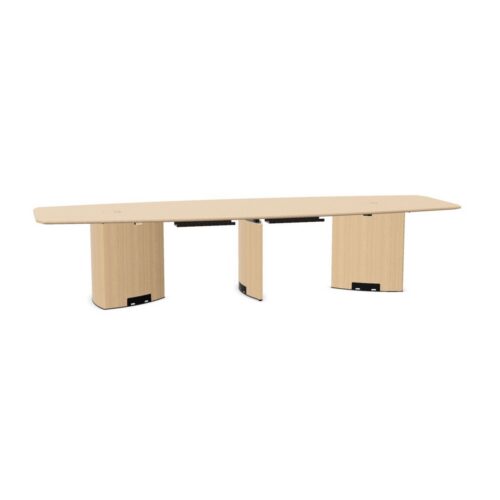
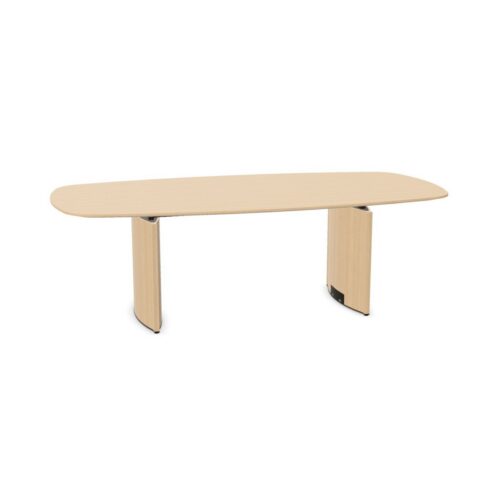
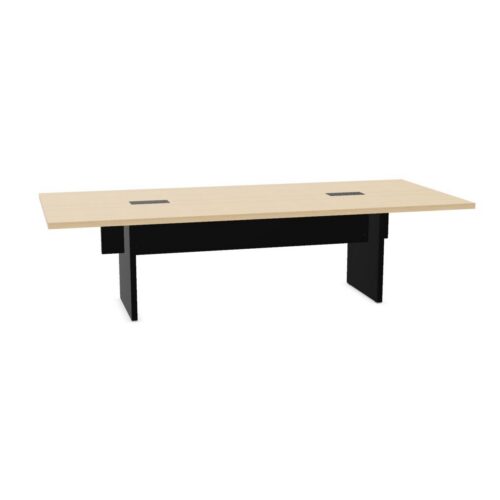
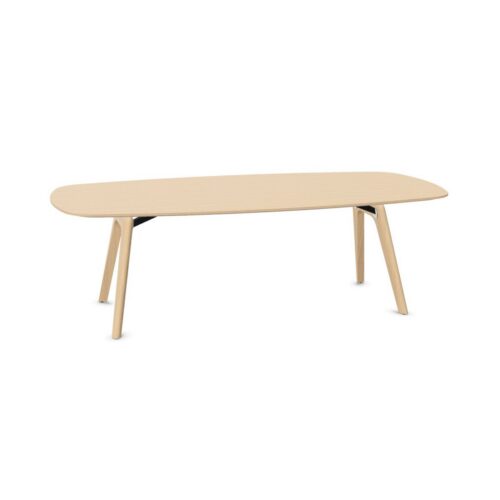
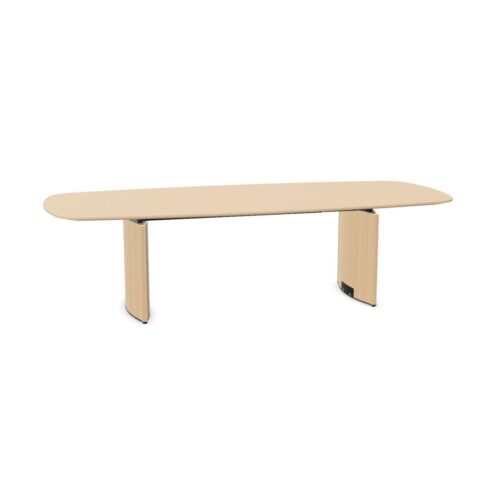
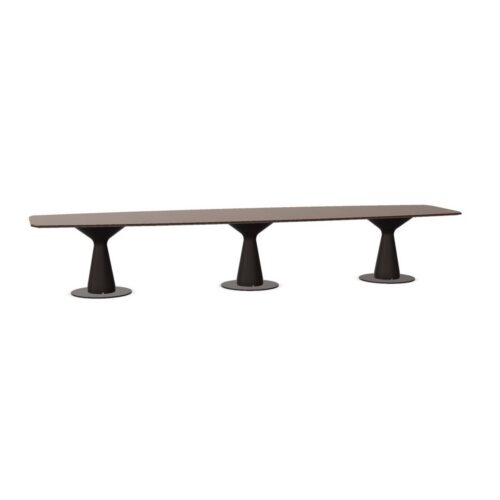
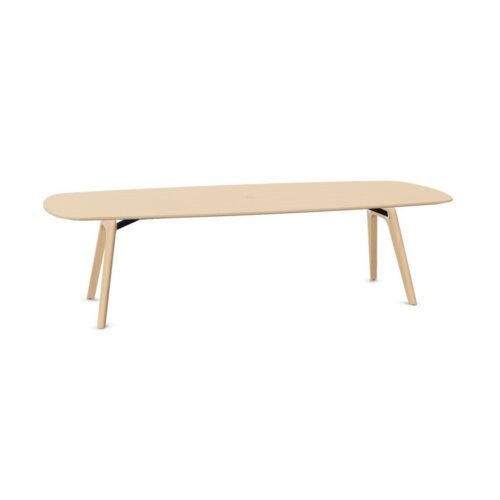
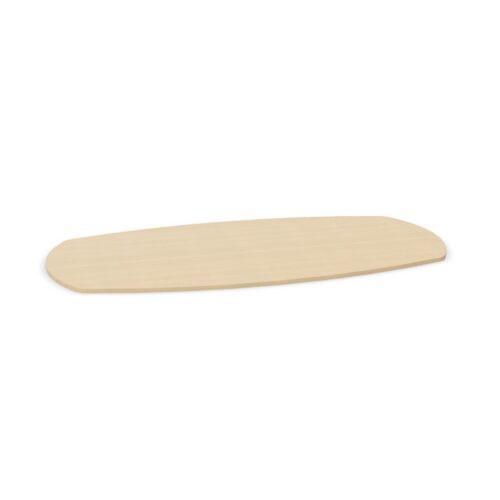
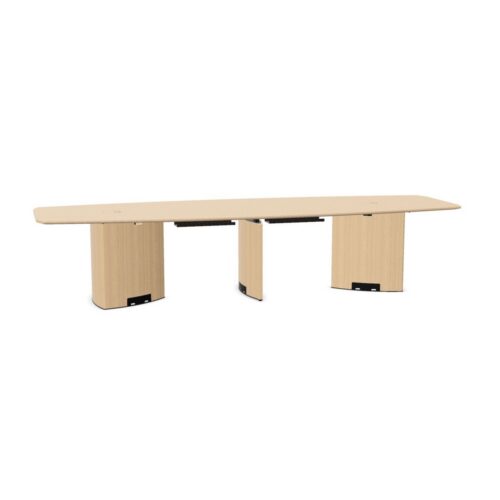
Rounded-Side Conference Tables Without Cable Trays

Conference tables with tops rounded on both sides introduce curved sections to the meeting surface while omitting a cable tray beneath it. The combination calls for attention to how chairs follow the actual perimeter and how any connected equipment reaches the tabletop. Rounded sides shape the available working edge; the absence of a tray leaves cable organization as a separate planning task.

Consider the room’s usual meeting pattern before deciding on the arrangement. Conversation and paper reviews may place the emphasis on participant relationships and shared materials, while screen-based sessions add viewing direction and connection routes. Check each intended seat against the curve, the base underneath and the approach from the room entrance. Rounded sides do not establish the rest of the tabletop geometry or remove the need for clear circulation. Plan the complete setting around occupied chairs and the way people move during a session.

3 models
From €58.63 p/m
18 models
From €27.49 p/m
8 models
From €12.16 p/m
8 models
From €30.83 p/m
30 models
From €16.42 p/m
5 models
From €25.05 p/m
2 models
From €9.37 p/m
13 models
From €8.10 p/m
5 models
From €10.64 p/m
2 models
From €125.31 p/m
€7.77 p/m
12 models
From €2.99 p/m
€25.85 p/m
12 models
From €55.42 p/m
3 models
From €39.32 p/m
2 models
From €18.08 p/m
2 models
From €5.54 p/m
18 models
From €42.84 p/m
8 models
From €23.66 p/m

Planning Conference Tables With Tops Rounded on Both Sides

Start by examining how the rounded sections meet the intended working positions. A chair following a curved edge may face a different direction from a neighboring chair, which affects conversation and the placement of personal materials. Assess the actual perimeter rather than assuming a uniform seating pattern. Conference tables with tops rounded on both sides should be reviewed with the base arrangement in mind as well, because the outline alone does not establish where people can sit comfortably. Consider whether particular positions serve discussion, shared documents or screen viewing, then let those activities guide the arrangement around the table.

Keeping Device Use Practical Without a Tray

Without a cable tray, identify how frequently the room needs connected equipment and what organization that requires. Meetings based on conversation or printed papers may involve fewer leads, while regular digital work needs a clearly planned connection route. Follow each proposed route from the room supply to the device, including its approach to the curved edge. Keep leads away from places where chairs move or participants walk. Do not infer the presence or absence of other connection features from the lack of a tray. Assess the actual equipment setup independently and establish where temporary leads are stored between sessions.

Relating Curved Seating to Shared Displays

A rounded working edge can influence the direction in which a seated person naturally faces. That direction needs to be checked against a wall display or presentation area, particularly when participants alternate between discussion and screen content. For conference tables with rounded sides, test the view from the intended seats with personal materials in place. A position that works well for conversation may need adjustment for longer screen reviews. Consider leaving an unsuitable section unoccupied rather than expecting every part of the perimeter to serve the same purpose. Review how any device cables affect those adjustments before finalizing the seating plan.

Maintaining Clear Routes Around the Perimeter

Rounded sections do not eliminate the need to plan movement around the table. Look at the route from the entrance to each seat, access behind occupied chairs and movement toward storage or presentation equipment. Avoid placing loose meeting materials where people step around the curved edge. Include temporary connections in the review whenever they are part of normal use. After a session, return chairs and equipment to agreed positions so the next meeting starts with a usable arrangement. If participants repeatedly shift seats to find better views or access, reconsider the layout rather than treating those adjustments as isolated interruptions.

Frequently Asked Questions

Should chairs follow the curve exactly?

Chair positions should serve the meeting activity and fit the actual edge and base arrangement. Following the curve visually is less useful if it leaves a participant poorly oriented toward shared materials or the display.

Can rounded sides replace circulation planning?

No. Conference tables with tops rounded on both sides still need clear approaches and room for chair movement. Assess routes with the table occupied, including any temporary leads used during connected meetings.

How should occasional laptop connections be handled?

Plan a separate route from the room supply to the working position and agree where leads are stored afterward. Check that temporary connections remain clear of walking paths and do not prevent people from adjusting their chairs.

Explore related selections