



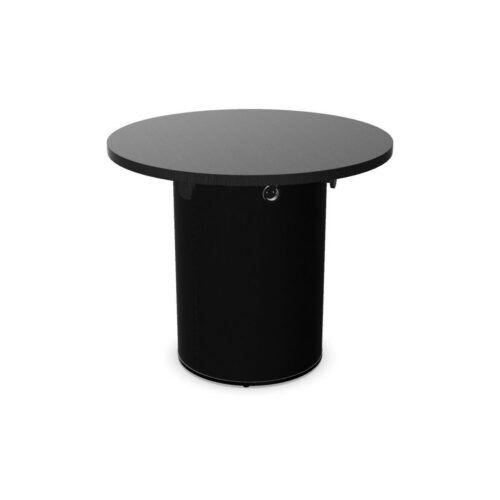


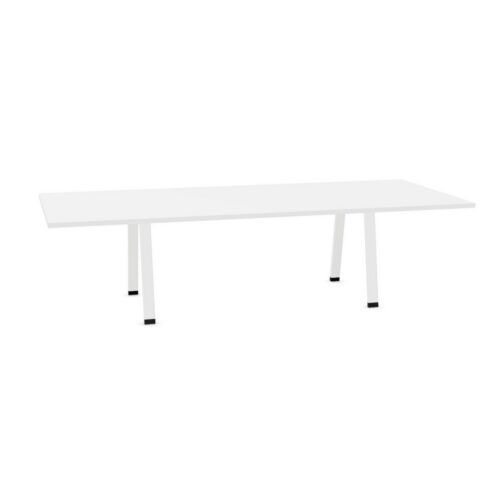


Arrange conference tables with round tops and melamine tops
Start with the conversation the room needs to support. Around a circular perimeter, chairs relate to a shared center rather than a division between side and end positions. Place them according to how colleagues address one another and use the tabletop. Then check the relationship between those chairs and the room's entrance, storage and presentation area. The melamine surface belongs in the same planning exercise: compare its actual appearance with surrounding furniture while reviewing how it will be used. A coherent arrangement brings the material, circular outline and occupied seating together without assuming that shape alone resolves the room's practical demands.
Make the center useful for shared information
A central position may seem the natural place for documents, but access still needs to be checked from each intended seat. Decide what the group needs to see together and what should remain beside individual participants. Move papers around the table when that works better than leaving them fixed in the middle. With round melamine conference tables, keeping personal notes near their owners helps distinguish the shared work area. Avoid allowing inactive reference material to occupy that area throughout the session. The center should support the current discussion, while the surrounding tabletop remains available for the work each person is doing.
Relate the circular outline to nearby furniture
A round table will often sit among straight walls, storage fronts and other furniture edges. Consider how the circle belongs within that setting rather than expecting it to follow the same lines. Where nearby surfaces are also melamine, compare the actual finishes before deciding on a visual match. A shared material name does not establish identical color or appearance. Review the combination from the doorway and from seated positions. Keep the arrangement understandable by allowing the meeting surface a clear place among surrounding furnishings. Supporting furniture should contribute to the room without interrupting the routes needed to reach the circular perimeter.
