



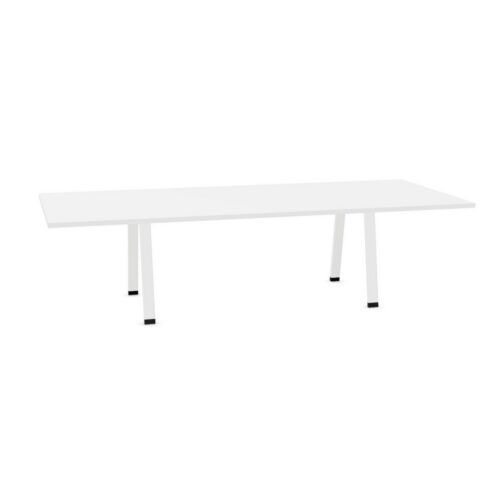

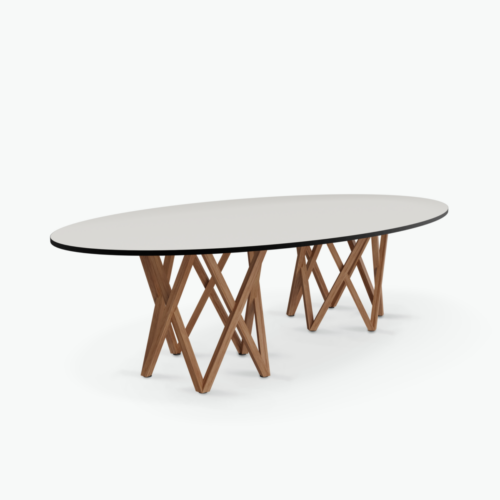


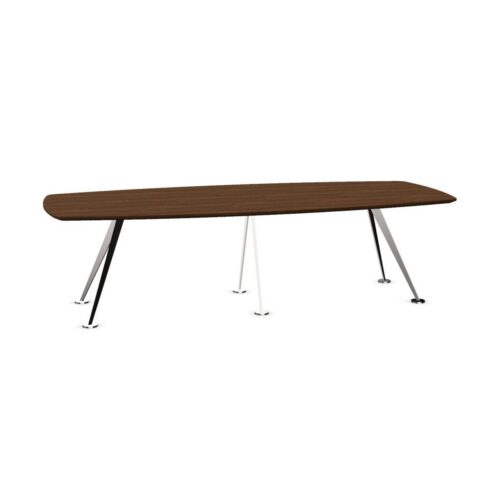


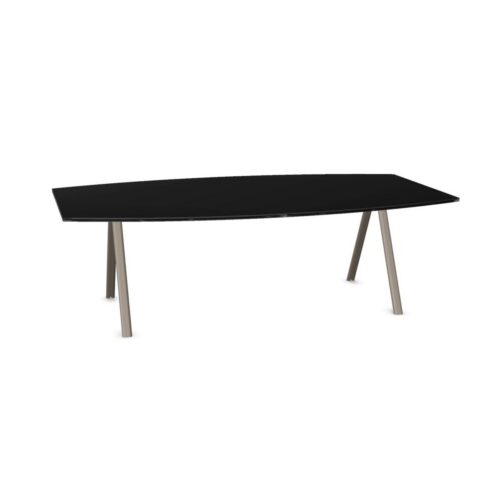
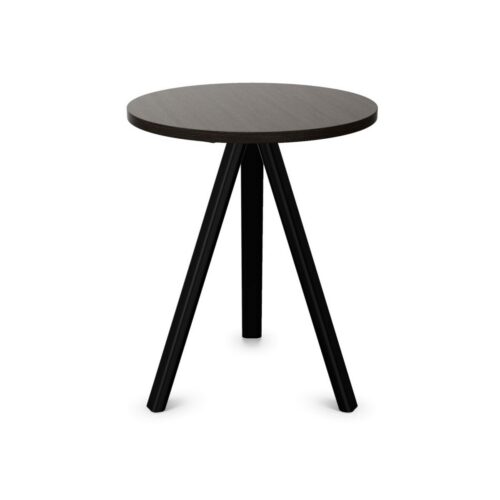


Planning Conference Tables With Round Tops and HPL Tops
Start with the direction of conversation. A round tabletop does not create the end positions associated with a rectangular outline, so decide whether the room should support discussion around the surface or attention toward a presenter. Place chairs deliberately instead of spacing them by appearance alone. Each position should have a useful relationship with the shared work area and a practical route back into the room. If meetings alternate between conversation and presentations, test the change in posture involved. Turning toward a screen should not require participants to move into the route used by others entering or leaving.
Keep Circulation Separate From Chair Movement
The curved perimeter needs to be considered alongside the rectangular features that often surround it: walls, cabinets and doorways. Sketch the table outline, then add chairs in their occupied and pulled-back positions. Look particularly at the route between the entrance and the far side of the table. A gap that appears open beside an empty chair may become part of that chair's movement area during a meeting. Keep access to storage outside this overlap where possible. Check the room from the doorway as well as from seated positions, because the clearest visual route is not always the most practical walking route.
