



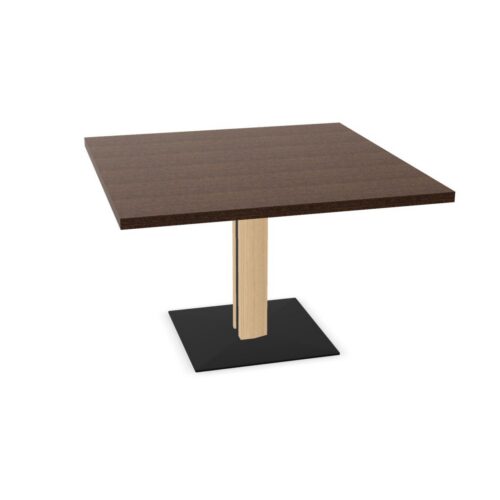


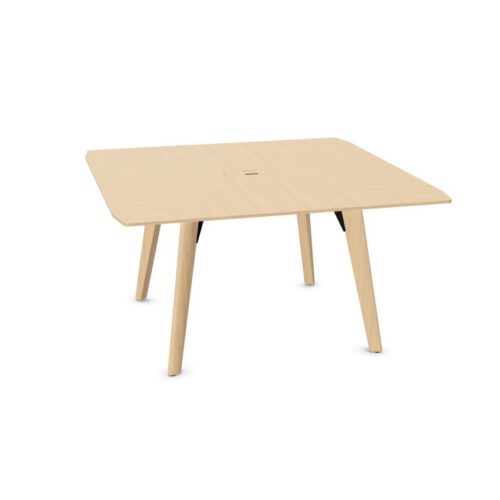

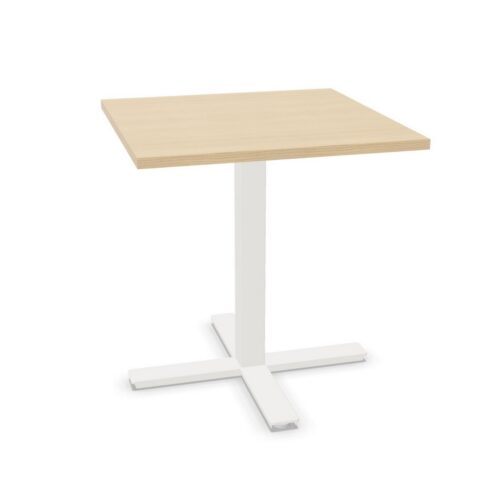
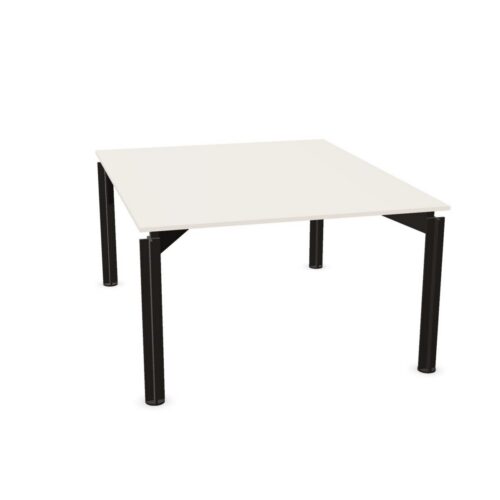


Planning Fixed-Height Conference Tables With Square Tops
Start by deciding how the room will be used most often. A square surface does not establish a long axis, so the placement of screens, doors, and seating becomes important in defining the meeting's focus. Consider whether participants primarily face colleagues across the center or turn toward shared content. Test the intended arrangement from the seats people will occupy. A fixed height keeps the surface position consistent, but it does not eliminate the need to review the wider layout. The best starting position is the one that supports the recurring activity while preserving practical approaches to the seating area.
Check Chair Fit Before Settling the Layout
The surface height is not adjustable, making the relationship with the intended chairs a central selection issue. Assess how people sit at the table and move toward and away from it. Where chairs have arms, check how those arms relate to the tabletop and the intended seating position. Do not assume that a chair is suitable simply because it can be placed beside an edge. Look at the working relationship during a meeting, including use of documents or devices. If the room uses different seating for different activities, evaluate those arrangements separately against the same fixed surface.
