

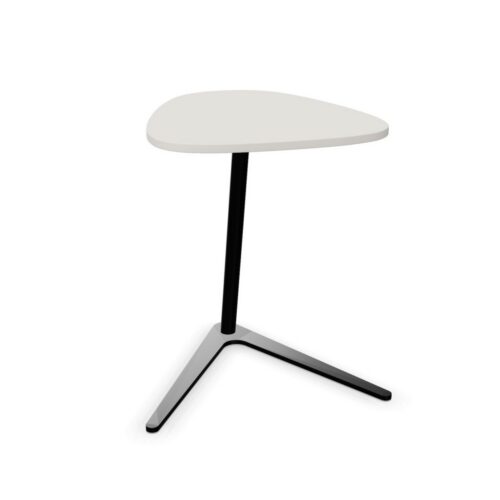
Trigoon Conference Tables With Manual Height Adjustment

Record a normal starting arrangement for the room, then establish when changing the table height would help the next activity. The trigoon tabletop is paired here with a working height that can be changed manually. That means room planning should address both the tabletop outline and the practical routine for making adjustments. The precise method and available working positions need to be confirmed before assigning the table to particular activities.

Begin with how people will gather around the top. Consider the relationship between their chairs, shared documents and the room’s presentation point, then assess the working height appropriate to that arrangement. Manual adjustment adds a preparation step when a different setting is needed. A considered room plan makes space for that task without treating every meeting as a reason to alter the table. The aim is a useful match between the trigoon shape, the selected working position and the room’s regular use.

7 models
From €10.56 p/m
2 models
From €5.94 p/m

Planning manually adjustable trigoon conference tables

Manual height adjustment introduces a choice that a fixed working surface does not provide. Decide what that choice needs to accomplish in the room: accommodating a different chair arrangement, preparing for another activity or adapting the working position for shared use. Confirm that the table's available settings address the actual requirement. Manual adjustment does not identify a particular handle, tool or sequence, so avoid building a room routine around an assumed mechanism. Treat the operating method as something to verify before deciding where the table belongs and how frequently its height will change.

Let the Trigoon Outline Inform Participant Positions

Review the tabletop from each intended place instead of assuming that every position offers the same relationship to the meeting. Check where participants will put documents, how they will face colleagues and whether a shared display requires uncomfortable turning. The trigoon outline makes this assessment particularly useful because the room arrangement should follow the actual top rather than a familiar seating template. Try the chairs in place before finalizing the orientation. Keep the approach to each seat separate from the space someone else needs to sit, work and move away from the table.

Plan Access for Manual Adjustment

Once the operating method is confirmed, check where the person making the adjustment needs to stand and what surrounding furniture must be clear. Follow the applicable instructions for preparing the tabletop and making changes. Avoid positioning storage or chairs where they obstruct access needed for operation. Assess manually adjustable trigoon conference tables with the chairs and equipment that participants will use, considering the complete working arrangement at each intended position. A practical location supports everyday meetings while also allowing the table to be prepared properly when a different working height is wanted, without an improvised rearrangement of the room.

Coordinate Table Settings With Shared Room Habits

A manually adjustable table benefits from an agreed preparation routine. Establish who checks the working position before a session and how the room should be left afterward. Review the chairs alongside the tabletop whenever the setting changes; a suitable table position still needs a compatible seated posture. If the room contains other working surfaces, consider how papers and equipment will be used between them. Consistency may matter for some activities, while others work comfortably with separate settings. Make that decision from the task rather than expecting manual adjustment to solve every difference between neighboring furniture.

Frequently Asked Questions

What should I confirm about height adjustment?

The working height is adjusted manually. Review the actual procedure in the table’s instructions, then assess the intended positions with the chairs and equipment used in the room.

Can the adjustment method be inferred from manual operation?

Manual operation establishes that the height is adjusted manually, but it does not specify the mechanism. Confirm the operating instructions before deciding on access, preparation steps or responsibility for changing the working position.

What deserves attention after adjusting the height?

Recheck the relationship between chairs and tabletop, including armrests and the seated working position. Also review nearby furniture and any equipment cables so the intended arrangement remains practical at the selected setting.

Explore related selections