



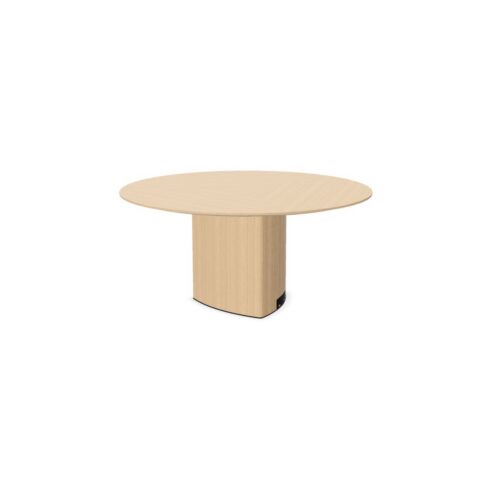
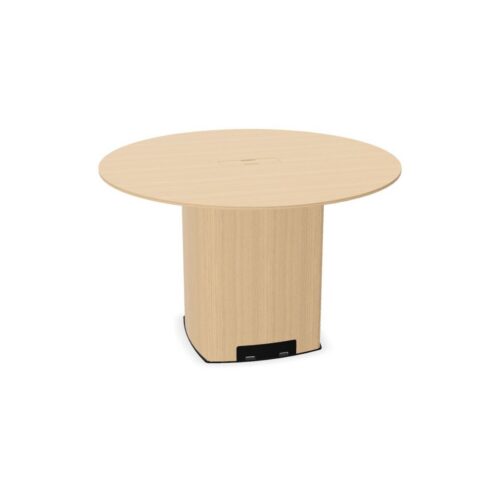
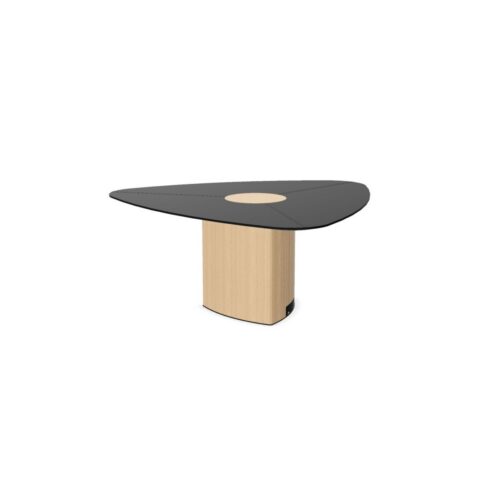


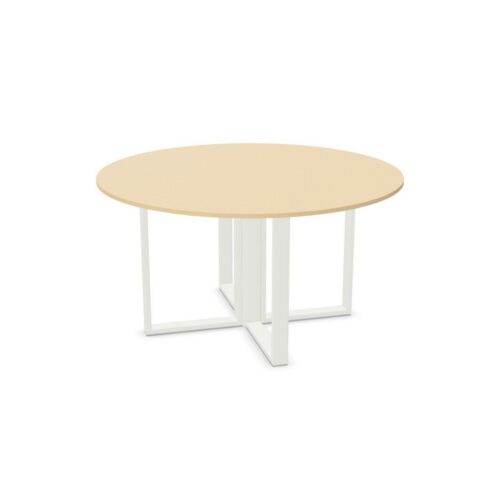



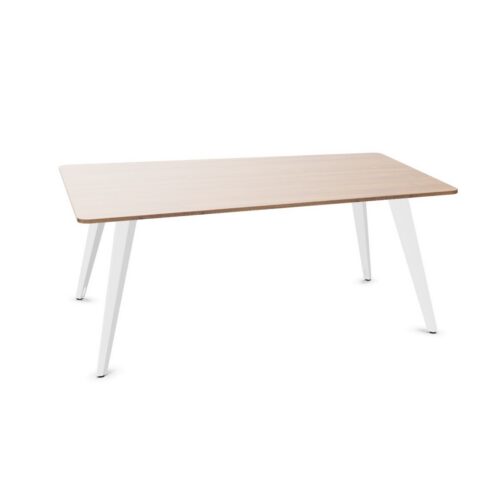
Conference Tables With Trigoon Tops and White Bases in Pale Interiors
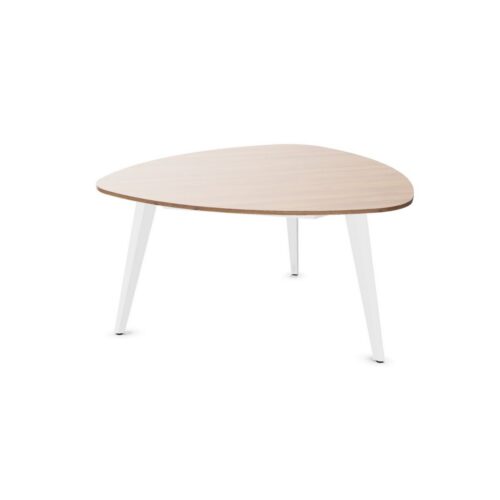
In a room with pale walls or storage, a white base can repeat an existing color below the tabletop. Check that relationship from several positions. The table may sit against different backgrounds when viewed from the entrance, a seated place or the presentation wall, changing how clearly the base stands out.
Consider where the trigoon outline becomes most apparent within that setting. Its orientation should make sense for the room's activities even when nearby finishes share similar colors. Avoid relying on color continuity alone to resolve the layout; chair access and useful views still need their own assessment.
Testing Contrasting Seating Around the Top
Dark or colored chairs can create a visible contrast with a white base. That relationship may help distinguish the seating from the table, although the effect depends on the surrounding floor and furniture. Compare chairs in their working positions, since their placement changes how much of the base remains visible.
Arrange seats according to the actual trigoon perimeter and how participants will face one another. Do not force a familiar seating pattern onto an unfamiliar outline. Check whether neighboring chairs can be used independently and whether people have a straightforward route to their places when a meeting has already started.
