



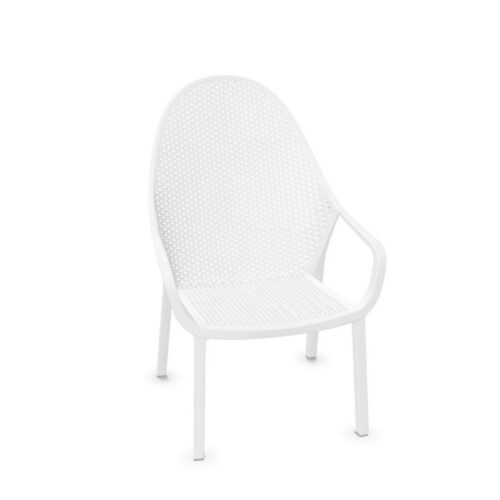
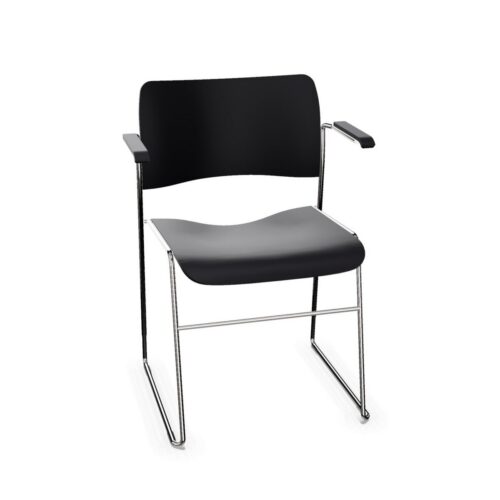


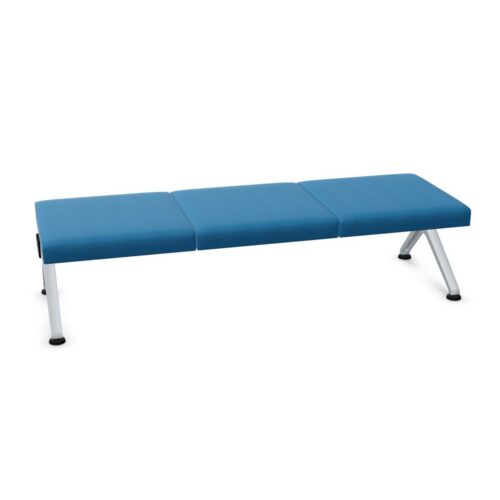


Placing lounge furniture with white bases and plastic upholstery
Establish the relationship between the base and floor before coordinating more distant elements. A pale background can create a close tonal relationship, while a darker one may define the white outline more clearly. Examine the actual combination in context rather than treating either result as a fixed characteristic of white furniture.
Consider how the seating meets the main routes through the lounge. The arrangement should remain understandable through placement and orientation, even where furniture and background are similar in color. Review the group from the entrance, adjoining spaces, and the positions people use when approaching an available seat.
Compare Whites as Specific Color References
If the interior already contains white surfaces, assess them alongside the base reference. Whites can appear different when placed together, so decide whether a close match is necessary or whether the furniture may have a distinct appearance. Include nearby wall and floor references in the same comparison.
Review these relationships under the intended lighting. A decision made in a separate meeting room may not translate directly to the lounge. Record the agreed reference and the surrounding finishes used during assessment, giving later reviews a concrete basis instead of relying on a general description such as matching white.
