





Positioning lounge furniture with oval tops and white bases
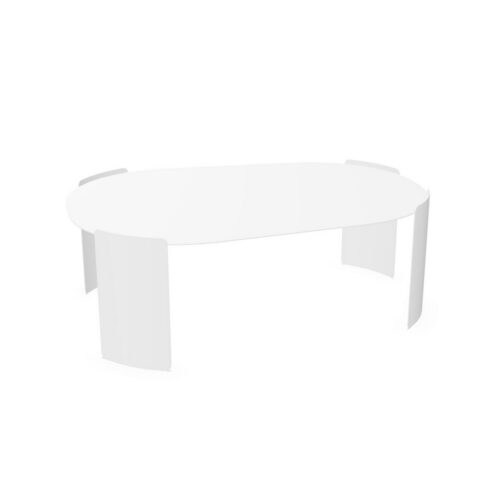
Use the oval's long axis as the first planning reference. Aligning it with the main seating run can establish a clear relationship between the table and the group. An alternative orientation may suit a different arrangement, but it should be assessed through the same seating references. Check the position of each rounded end once the main direction is established. These ends may face a walkway, an individual chair, or another part of the lounge. Their relationship with the room should be deliberate. The white base must also be reviewed in that position, since its orientation and footprint are separate from the oval perimeter above.
Consider the ends and sides separately
An oval table presents different relationships along its length and at its ends. Review the intended use from each adjacent seat rather than assuming that every position relates to the same part of the surface. Where opposing seating faces the longer sides, check the table's placement within that shared arrangement. Where a chair faces an end, consider how that position participates in the group. These observations help establish whether the outline suits the seating pattern. Rounded ends do not remove the need to assess circulation, so trace the routes around them and check the supporting footprint wherever people approach or leave the nearby seats.
