


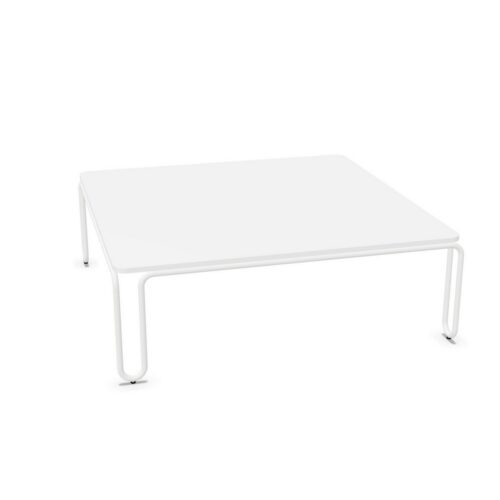


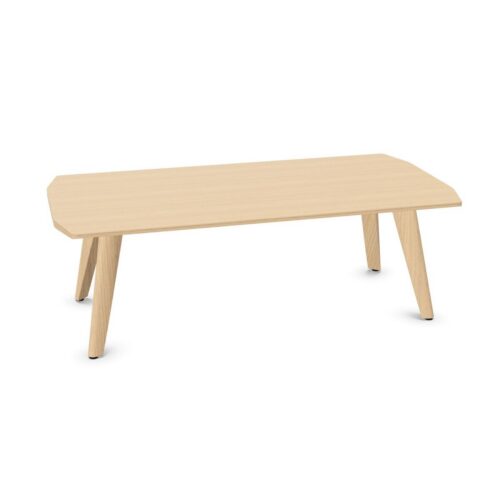

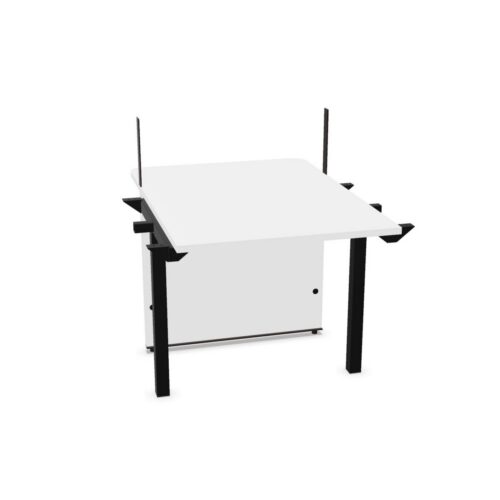


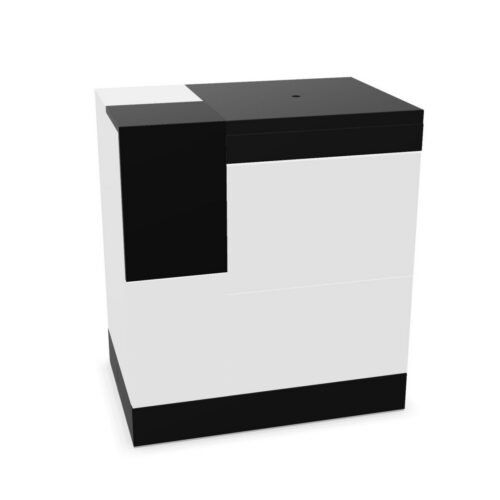
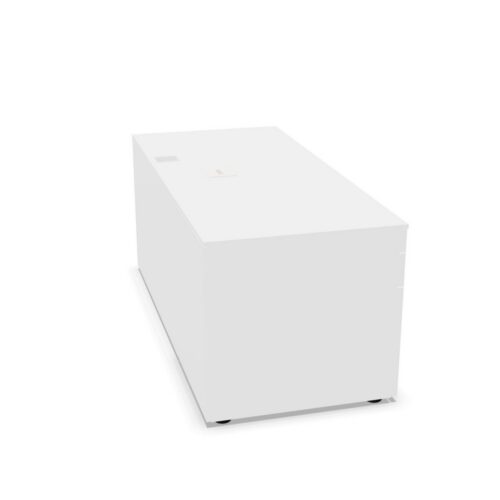




Arranging lounge furniture with rectangular tops and white bases
Establish the primary seating relationship before locating the table. A rectangular top can follow the front of a sofa or the direction between opposing seats, creating a clear axis within the lounge. Decide which relationship matters most when nearby walls or walkways follow different lines. Once the long edge is positioned, review the shorter ends in relation to adjacent chairs and entrances. The complete outline should belong to the seating group rather than simply echo a room boundary. Check the supporting element in the same position, particularly where its footprint differs from the rectangle and becomes visible beyond the main seated view.
Give end approaches their own review
The shorter ends deserve a separate circulation check because they often meet the routes into a linear seating arrangement. Trace how someone approaches a seat, turns toward the group, and leaves again. Note the position of the tabletop corners throughout that movement. A visually centered table may need a different placement if the busiest approach is concentrated at a particular end. Review the base below as well; the top perimeter does not establish the complete area occupied by the piece. Compare alternatives within the same seating arrangement so that the effect of a change in position can be understood without moving every surrounding element.
