



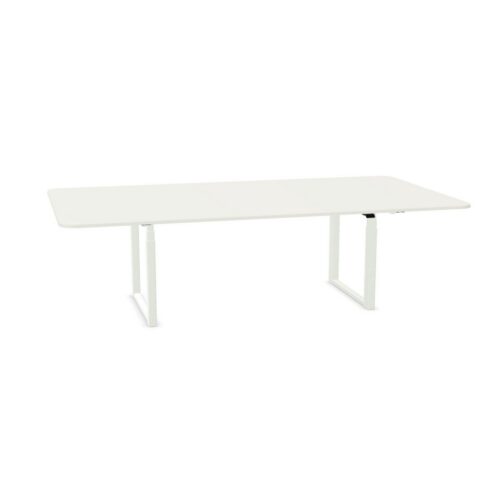


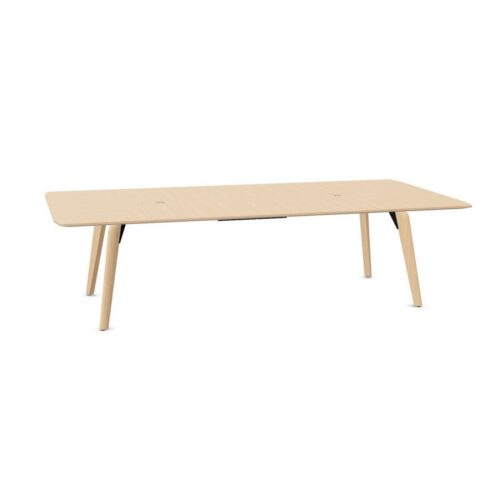


Assess beige under the room's usual lighting
Review the surface where meetings will actually take place. Daylight, room lighting and adjacent finishes can change the way a beige tone appears, so avoid making the color decision in isolation. Look across the tabletop from seated positions as well as from the entrance. Decide whether it should connect with the walls, stand apart from the floor or relate to the seating. You do not need every neutral element to match. A clear relationship between selected finishes can give the room a coherent appearance without depending on an exact color match.
Planning height-adjustable conference tables with beige surfaces
Height adjustment matters when the room has a reason to use different working levels. Describe those situations before giving the feature priority. A regularly repeated meeting format may need a different preparation routine from a room shared across varied activities. Consider who will change the setting and how the next group will understand the expected arrangement. The beige surface provides a consistent visual element through those changes. Adjustment itself does not identify its operating method or establish which working positions are available, so those points need separate confirmation.
