



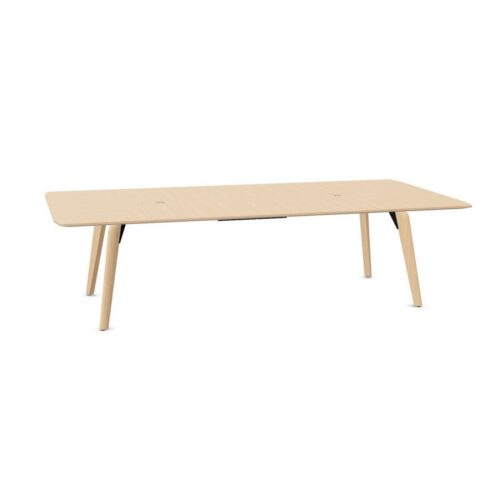


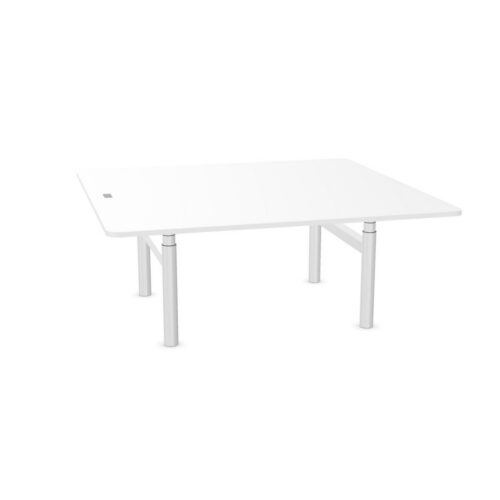




Place brown within the existing finish scheme
Begin with the finishes that are hardest to change. Brown doors or storage furniture may provide a useful reference, but several unrelated brown tones can make a room feel visually disjointed. Decide which element the tabletop should relate to and which elements can remain distinct. Assess the surface in the actual room lighting, including the view from the doorway. Its color can support continuity across the meeting area without establishing anything about the material beneath it. Keep decisions about appearance separate from assumptions about how the table will feel or perform.
Planning height-adjustable conference tables with brown surfaces
The practical comparison is between a working level that remains constant and one that can be changed. Write down the situations in which adjustment would be used, such as preparing the room for a different activity or arranging a different set of chairs. Avoid treating adjustability as a complete seating solution on its own. The chairs and table need to work together, and the intended working positions deserve a practical check. Confirm the adjustment method separately before deciding how it would fit into the room's normal preparation routine.
